The certificate of analysis is the one page in a starch sale that changes with every batch. Same grade, same specification, new numbers. That is exactly what the document is for. It reports what the laboratory measured on the exact lot that shipped, line by line, against the limits someone agreed to.
Buyers already know the COA matters. The difficulty is in the detail: which of the twelve parameters to read first, what “dry basis” hides, and where the EU and US limits actually sit. This guide walks through a modified starch COA the way an experienced QA manager reads one, from the header block to the last declaration line.
What should a buyer check on a modified starch COA? Read the header first: grade, batch, dates and signature. Then check the physical readings, the residual modification groups and the safety screens, in that order. Compare every value against your own specification, on the same basis and the same method.
What a Modified Starch COA Is
A certificate of analysis is a per-batch report of measured values. Each line names a parameter, states the method or the unit, and pairs the specification limit with the actual result for that lot. The document is signed and traceable. Nothing on it is aspirational; every figure exists because a sample was tested and a result was recorded.
Four documents surround a starch sale, and buyers mix them up at least once. A specification sheet lists the target ranges for a product and never changes. A COA reports what the lab measured for one specific batch. A technical data sheet explains how to use and store the product. A certificate of conformance carries the same title energy on paper and zero data: it attests that the batch meets the specification without showing a single result. The difference between a certificate of analysis and a certificate of conformance trips up even experienced importers, so check which one your supplier actually sent.
Per-batch certificates also sit in a family of documents that travel with every order. For the qualification side of that file, see the certificates that travel with your shipment, and for the batch-level record, keep reading here.
The twelve parameters on a starch COA group into five blocks: two identity checks, five physical readings, one residual chemistry check, and four safety screens. The sections below follow that order, because it matches how a receiving lab checks a shipment in.
Read the Header Before the Numbers
Parameters one and two sit above the results table, and they decide whether the rest of the page means anything. Parameter one is product identity: the product name, the E number where one applies, and the grade code that ties the batch to a specification. Parameter two is the batch header: lot number, production date and the site that made it. The header also carries the revision of the specification the batch was released against, and the signature of the person who authorized the release.
A COA with perfect numbers attached to the wrong lot is worse than no COA at all. The lot number is the thread that connects the bag in your warehouse to the retention sample in the factory. It runs back through the raw material intake record and every test result in between. When a customer complaint arrives on a specific pallet, the header block is what turns “a batch of starch” into one identifiable production run with a history.
Traceability for Audits and Clearance
In a quality audit or at customs, the header does the heavy lifting. An auditor picks a COA, reads the lot number, and asks to see the corresponding records. If the specification revision is missing, the auditor cannot tell what the batch was compared against. If the signature is missing, the document has no author. Both gaps are cheap to fix at the factory and expensive to fix after the container has sailed.
Batch discipline is also a filter for the kind of supplier you are buying from. With a direct modified starch manufacturer, one party controls the production line, the laboratory and the certificate, so the batch thread never leaves the building. With multi-tier trading chains, the COA is often the weakest link in exactly this spot.

The Physical and Functional Parameters
Parameters three through seven are the readings your receiving lab will reproduce first. These five values describe the powder itself and predict how it will behave on your line.
| Parameter | What the COA shows | What to check it against |
|---|---|---|
| Appearance and whiteness | Visual grade, color, foreign matter | Your target grade description |
| Moisture (dry basis) | Water content measured against dry solids | Your moisture band and the EU loss-on-drying ceiling |
| pH | Acidity of the slurry as prepared for the test | Your process window |
| Viscosity | Value plus method and test conditions | Your target curve, on the same method |
| Particle size (mesh) | Granulation and screening profile | Your dispersion and screening spec |
The values move with the grade. A batch of the modified starch series built for high-temperature processing will not show the same viscosity profile as one built for cold-water solubility, and it should not. Read these five readings against the specification for the grade you ordered, never against a generic expectation.
Moisture and the Dry-Basis Trap
Dry-basis moisture expresses water content relative to the dry solids of the sample. A handheld meter reports moisture as received, which includes the water in the total weight and usually reads higher. The two bases do not compare directly, and that single mismatch causes more incoming-inspection disputes than any other reading on the page. When your specification says 12% maximum, confirm which basis it uses before you reject a lot.
The EU purity criteria put a ceiling on loss on drying by starch source: not more than 15.0% for cereal starch, 21.0% for potato starch and 18.0% for other starches. Those figures are regulatory ceilings for the whole category, not operating targets. A supplier who runs near the ceiling leaves no margin for a humid voyage. Our own per-batch certificates report dry-basis moisture inside a 3% to 5% band, because with starch the margin is the product.
Viscosity Depends on the Method
Viscosity is the parameter buyers care about most and read carelessly. An RVA profile reports peak, trough and final viscosity across a defined heating and cooling program. A Brookfield reading reports a single point at one concentration, temperature and spindle speed. Two suppliers can both satisfy the same end use while their numbers differ by an order of magnitude, simply because the methods differ. A viscosity number without a method is an opinion.
When you compare a batch against a target curve, match the method first: instrument, concentration, temperature program and measurement point. Only then do the numbers mean the same thing. This is also why we benchmark every batch against the customer’s own target curve rather than a house figure. It is why the certificate lists the method next to the reading. For a worked example, the published acid-stability benchmarks for E1422 in ketchup show how dose moves consistency and yield stress.

Residual Modification Groups and Their Limits
Parameter eight is the chemistry that makes modified starch modified. The residual groups left in the finished powder show how far the reaction was allowed to run. They are the first thing an EU-side importer scans after the heavy metal block. Each group has a ceiling in the EU purity criteria, and each ceiling maps to specific E codes.
| Residual group | Typical E codes | EU 231/2012 ceiling |
|---|---|---|
| Acetyl groups | E 1414, E 1420, E 1422 | Not more than 2.5% (degree of substitution 0.1) |
| Hydroxypropyl groups | E 1440, E 1442 | Not more than 7.0% (anhydrous basis) |
| Residual phosphate (as P) | E 1412, E 1413 | Not more than 0.5% for wheat or potato starch; 0.4% for other starches |
| Octenylsuccinyl groups | E 1450 | Not more than 3%; octenylsuccinic acid residue not more than 0.3% |
Hydroxypropyl types carry one extra screen that many reading guides miss: propylene chlorohydrin residues should not exceed 1 mg/kg. It is a process residue rather than a functional group, but it appears in the same compliance conversation for E 1440 and E 1442.
Read this block as evidence of process control, not as a chemistry lesson. A hydroxypropyl result that drifts toward the ceiling batch after batch says the reaction conditions are moving. A result that sits stable in a narrow band says the process is holding steady. The EFSA re-evaluation of the modified starch family is the reference document behind these ceilings. It covers the full E 1404 to E 1452 group, including E 1422 and E 1442. For how two neighboring codes differ in practice, see how E1442 and E1422 differ in residual groups.

The Safety Parameters Importers Screen For
The last four parameters are the screens that decide release and clearance: sulfur dioxide, heavy metals, microbiological counts and pathogens. Import authorities know these four by heart, and a certificate that gets them wrong stops at the port rather than the warehouse.
| Parameter | EU 231/2012 criterion |
|---|---|
| Sulfur dioxide (cereal starches) | Not more than 50 mg/kg, anhydrous basis |
| Sulfur dioxide (other starches) | Not more than 10 mg/kg |
| Lead | Not more than 2 mg/kg (anhydrous basis) |
| Arsenic | Not more than 1 mg/kg |
| Mercury | Not more than 0.1 mg/kg |
| Microbiological counts | Set by your specification |
| Pathogens (E. coli, Salmonella) | Set by your specification |
Sulfur dioxide is the line most often misread, because the ceiling depends on the starch source. Cereal starches such as corn and wheat carry the 50 mg/kg allowance on an anhydrous basis. Starches from other sources, including potato and tapioca, sit at 10 mg/kg unless their entry states otherwise. A buyer comparing a corn starch COA against a tapioca benchmark will flag a compliant lot as out of spec. File the right ceiling next to the right raw material.
Micro Limits Come From Your Specification
The EU purity criteria govern chemistry, not microbiology. Microbiological limits for modified starch are set in the buyer’s own specification or by the destination market. That is exactly why they deserve a careful look on the COA. A working specification pins four things: a total plate count ceiling, a yeast and mold ceiling, and indicator organisms such as E. coli and Salmonella specified as absent. When you check the certificate, confirm the unit, the sampling basis and that each line shows a measured result rather than a dash.
Two other rulebooks matter alongside the EU text. In the United States, the product family is defined by the FDA regulation for food starch-modified, 21 CFR 172.892. The same rulebook fixes the identity of the starch sugars: 21 CFR 168.110 and 168.111 define dextrose monohydrate and anhydrous dextrose down to their solids minima. Internationally, the safety evaluation sits with JECFA, the FAO and WHO expert committee that assesses food additives. If your market is not the EU, ask which rulebook your supplier writes the certificate against, and check that the answer matches your import file.

How to Set Acceptance Criteria That Work
Every parameter above becomes useful the moment your team writes it into an acceptance table with three columns: parameter, method or basis, and limit. The three columns travel together. A limit without a method is unenforceable, and a method without a limit gives your receiving lab nothing to conclude.
Align the Basis and the Method
Before you compare a supplier COA against your incoming result, align two things. First the basis: dry basis against dry basis, anhydrous against anhydrous, as-received against as-received. Second the method: the same test conditions on both sides. When the two sides agree on both, a difference in numbers is a real difference in product. When they do not, the difference is a documentation gap, and arguing about it burns weeks.
Comparing COAs From Two Suppliers
Side-by-side comparison only works after the normalization above. Two certificates can both comply with EU limits while their viscosity values look far apart, because one lists an RVA curve and the other a single Brookfield point. Ask each supplier for the method conditions first, then compare the curves. The supplier who can show a full profile against your target curve answers more questions than the one who quotes a single number. The buyer-side version of that exercise, from the first brief statement of requirements to the finished curve report, is covered in how a starch counter-match runs.
The same logic applies when you specify a functional grade. If your line runs on a pregelatinized system, the parameter set shifts when cold-water solubility enters the picture. On a tapioca base, the modified tapioca starch guide traces the same rows through the whole range of grades.

When a COA Stops Being Proof
A certificate is evidence only while it stays batch-specific and traceable. Six patterns turn it into decoration instead. Any one of them is worth a written question to the supplier; two or more mean the documentation system needs a harder look. The system certificate above these batch documents follows its own rules: how the ISO 22000 and FSSC 22000 layers differ covers what it proves.
- Basis or unit mismatch. Moisture quoted against an unclear basis, or limits switching between percent and mg/kg without warning. The numbers may be fine; the document fails the comparison test.
- A viscosity value with no method. Without instrument, concentration and conditions, the number cannot be reproduced or compared. This is the most common gap on certificates from trading intermediaries.
- Identical values across lots. Real measurements move within a band. If every batch shows exactly the same moisture and viscosity to the decimal, someone is copying the previous certificate instead of testing.
- Limits that quietly widen. Compare the specification column against earlier certificates. A ceiling that drifts from 12% to 14% between shipments is a silent spec change, and it will surface at your receiving dock.
- Typical values instead of measured results. A certificate that reports “typical” figures describes a brochure, not a batch. Ask for the measured result for the lot you received.
- Header gaps. No lot number, no production date, no signature. Without them, the document cannot be traced to a sample or a production run, which removes its entire reason to exist.
None of these flags requires a laboratory to detect. They require fifteen minutes with the modified starch COA, a copy of the specification, and the discipline to ask before the container ships rather than after.

How GFMStech Generates Your COA
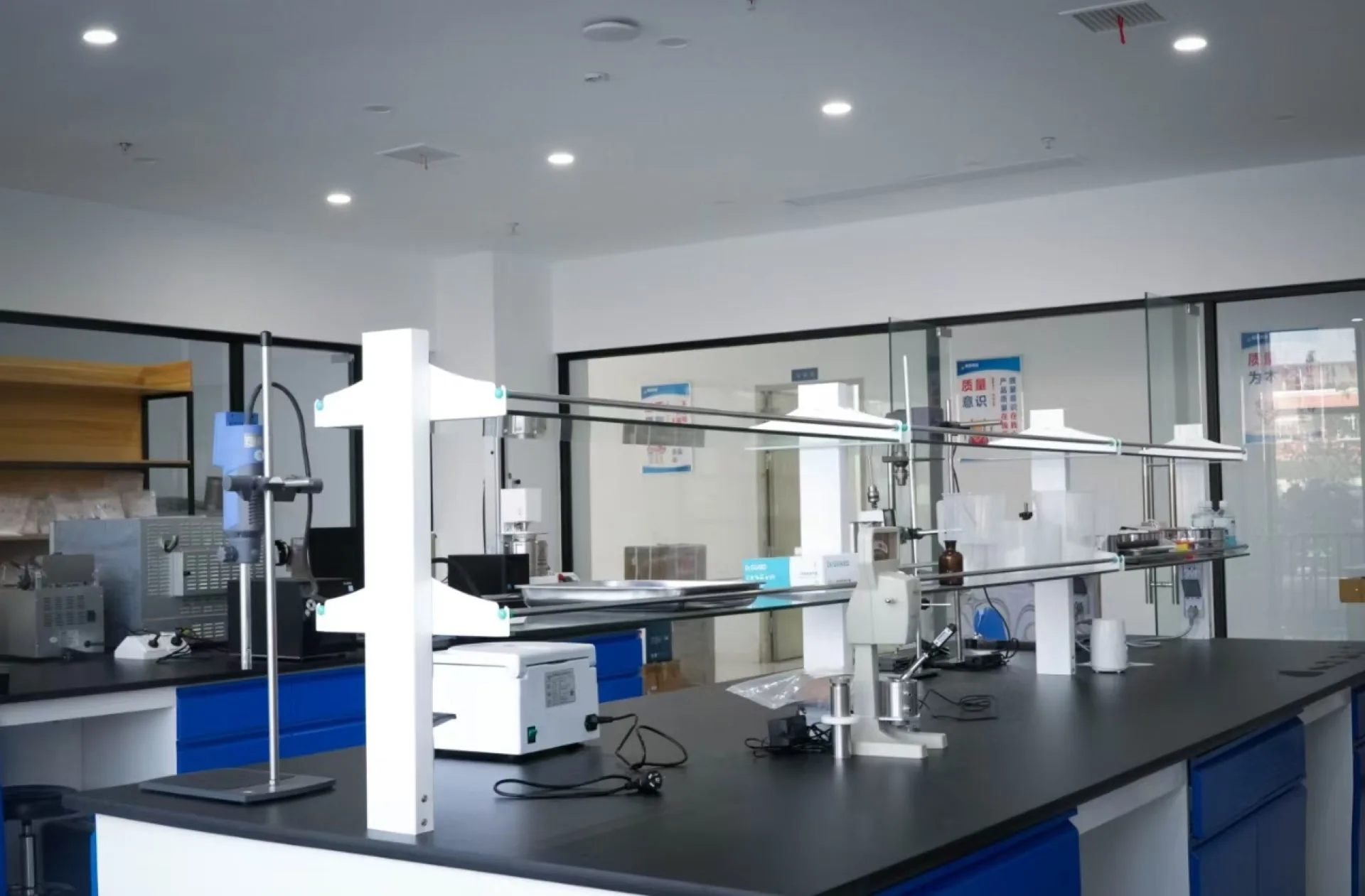
Every batch of the modified starch series that leaves our Suzhou base carries its own certificate of analysis. The certificate lists all specification parameters with the target and the actual value side by side. Your QA team can verify the release decision without asking for a second document. Dry-basis moisture is reported inside a 3% to 5% band, and the viscosity line shows the method next to the number.
The viscosity work happens in our in-house QC laboratory on an RVA, which benchmarks peak, trough and final viscosity against the customer’s target curve. That is the difference between reporting a number and reporting a behavior: your line will see the full curve, not a single point.
Four checkpoints sit between raw material intake and the container, and statistical process control runs on all four production lines. Retention samples are kept for 12 months per batch, so any value on a certificate can be re-tested long after the shipment arrives. When you need documentation, send one request: certificates, test reports or a sample COA go out within 24 hours.
The document set is finished in English, with the TDS and SDS layout adjustable to your destination market’s clearance requirements. Every delivery packs the per-batch COA, the TDS and SDS, a pre-shipment sample and an application SOP together. The quality system behind the paperwork holds ISO 9001:2015, ISO 22000 and ISO 14001, alongside HALAL and KOSHER certification.

Want to see the document before you order? Send us the grade you are evaluating and the market you ship to, and we will return a sample COA with the full parameter set for your review. Request any certificate, test report or sample COA, and the paperwork arrives within 24 hours.
Modified Starch COA Questions Buyers Ask

What Is a COA for Modified Starch?
A modified starch COA is a per-batch document that reports the measured value of each specification parameter for the lot that shipped. It covers identity and lot data, moisture on a dry basis, pH, viscosity with its method, residual modification groups, sulfur dioxide, heavy metals and microbiological results. It becomes your release record for that specific batch.
What Is the Difference Between COA and TDS?
A COA reports what the laboratory measured for one specific batch. A specification sheet lists the target ranges for a product and never changes. A TDS explains how to use and store the product. A certificate of conformance only attests that the batch meets the specification, without showing any data. Each answers a different question.
Why Is Moisture Reported on a Dry Basis?
Dry-basis moisture expresses water content relative to the dry solids, so the number stays comparable across samples. A meter reading as received includes the water in the total weight, which usually reads higher and shifts with ambient humidity. Compare two moisture values only when both sit on the same basis, or the comparison is meaningless.
How Much Sulfur Dioxide Can Modified Starch Carry?
Under EU 231/2012, modified cereal starches may carry up to 50 mg/kg sulfur dioxide on an anhydrous basis, while other modified starches are capped at 10 mg/kg. The 50 mg/kg tier covers cereal sources such as corn and wheat. Potato and tapioca types fall under the 10 mg/kg ceiling unless their entry states otherwise.
How Do I Check a Supplier COA?
Put the certificate next to your specification and the destination rules. In the EU, the purity criteria in Regulation 231/2012 apply to modified starches sold as food additives. In the United States, food starch-modified is defined by 21 CFR 172.892. Flag any parameter that shows no method, no limit or no measured value.