Yes, a single custom blend can replace three separate ingredients on a sauce line without touching the process, but not because the blend is compositionally equivalent. It works when three conditions are met: the combined function is written as measurable process outcomes rather than a specification match; the blend’s physical form, particle size and dispersion behavior fit the feeders and transfer steps you already run; and the acceptance limits come from your own line data, captured before anything changes. Miss one and you are not substituting ingredients, you are reformulating a process. The five-stage protocol below turns “validate it on your line” into gates with pass and fail outcomes.
What Does “Without Changing the Process” Have to Mean?
Define the invariant list before the first trial, not after the first disagreement. On a sauce line it normally means the same equipment, the same addition point for the thickener phase, the same mixing speed and time, the same heating profile and hold, the same pH and solids targets at each step, and the same cooling, filling and packaging conditions. Anything outside that list is a process change, including a longer hold or an extra pre-dispersion step. A blend that only works after one of those has not replaced three ingredients; it has moved the problem into your process.
The definition also has to be functional. “Matches texture” is not a specification. The process responds to a short list of measured outcomes: viscosity at fill, viscosity after the heat treatment and after cooling, resistance to thinning during hold, water binding with no separation, acid and salt tolerance, and stability across the declared shelf life. Mass balance belongs on that list too.
There is also a regulatory definition. One bag instead of three does not merge the ingredients. The modified starches remain food starch-modified under 21 CFR 172.892, which limits each treatment to “the amount reasonably required to accomplish the intended physical or technical effect” and requires the additive container to carry the name “food starch-modified.” Your finished-product ingredient statement follows the components, not the purchase order, so settle it before the texture work.
| Stage | Evidence it must produce | Gate |
|---|---|---|
| 1. Baseline capture | Written methods; normal range and spread per critical response | Repeatable by another shift, from a stable process window |
| 2. Blend equivalence specification | One row per function with method and decision rule; balance and label sign-off | No function left without a method; a gap blocks the pilot |
| 3. Bench-to-pilot bridging | Use-rate window; pilot results at both ends of the operating window | Inside baseline range, same curve shape, no new failure mode |
| 4. First production run | Sampling record, line data, retained samples, rollback log | All critical responses in range; no blend-attributable stop; normal fill weight |
| 5. Ongoing batch verification | COA check, confirmation test, trend chart | Both inside the agreed band; consecutive misses trigger re-qualification |
Stage 1: What Should You Measure Before Anything Changes?
The baseline is the only reference the project has, so its quality sets every later decision. Capture routine production batches, not a demonstration run, and record the recipe as executed: weighed quantities per addition, batch size, order. Record measured time, temperature and shear history at each step, not the screen’s set points. Record viscosity at fixed checkpoints with instrument, geometry, sample temperature and shear rate, plus solids, pH, appearance and particle size where relevant. Add line data — fill weight, throughput, rejects, clean-up time — and a retained sample per batch.
Keep capturing until the range stops moving. How many batches that takes is set by your variability, not by a supplier deck. If a critical response swings widely between ordinary batches, the band has to be that wide.
Pass gate: another shift can repeat each method from written instructions, the window contains no reformulation, equipment change or raw-material switch, and every critical response has a normal range and a spread. Fail gate: a response only one person can measure reliably, or a window with an unexplained upset, makes every later comparison arguable — fix the method and recapture.

Stage 2: What Belongs in the Blend Equivalence Specification?
This document replaces the sentence “it should behave the same.” One row per function: what the three originals delivered, how the function is measured, and the decision rule. Rules should be relative to the baseline band; an absolute target invented in a meeting has no standing against your production history.
| Function | How to measure it | Pass rule |
|---|---|---|
| Viscosity development and shear retention | Viscosity at the Stage 1 checkpoints, and after a defined high-shear pass | Inside baseline range at every checkpoint; shear loss no greater than the worst baseline loss between those checkpoints |
| Acid and salt tolerance | Viscosity retained across the process hold; separation check | No steeper trend than baseline; no phase separation |
| Water binding | Free liquid on stored samples against retained baseline samples | Absent, or no more than baseline |
| Physical form and dosing | Bulk density, particle size, flow, dust, dispersion in the existing mixer | Target mass at existing feeder settings; no bridging; no lumps within the current mixing time |
| Mass and water balance | Blend mass against combined mass, water removed, solids at each step | Total solids and water match baseline within formulation tolerance |
| Label and documentation | Blend TDS, starch type and modification, finished ingredient statement | Quality and regulatory sign-off before the pilot order |
Two rows are easy to skip and expensive to miss. Physical form decides whether the blend reaches the kettle at the right rate: bulk density, particle size, dust and flow change how an existing auger behaves, and a blend that bridges in the hopper is a line stop whatever its curve looks like. That is why thickener systems are specified by viscosity behavior and handling together, not by chemistry alone. The balance row decides whether the comparison is valid at all.
Pass gate: every row has a method and a decision rule, the balance reconciles, and quality has signed off the labeling route. Fail gate: stop if any function has no method — an unmeasured function is the one that fails in production. Agree the document before the pilot, so the pilot is judged against it rather than against whoever is in the room.
Stage 3: How Do You Bridge Bench Results to a Pilot That Predicts the Line?
The bench has one job: find the use-rate window and dispersion behavior quickly. It cannot predict the line: viscosity development depends on heat rate, hold time and shear that a beaker on a hotplate does not reproduce at plant scale.
Bridge in two moves. On the bench, change use rate only and hold addition order, dispersion temperature and mixing time constant. Find the lowest rate that reaches the baseline responses and the highest that stays workable, and watch for lumping, skinning, burn-on or foam. Then pilot on equipment of the same type as production, with the same addition order, heating rate and hold, sampling at the Stage 1 checkpoints with the Stage 1 methods, at both ends of the operating window — a blend that only works at the midpoint is not qualified.
Pass gate: the bench brackets the baseline responses with no new failure mode; the pilot stays inside the baseline range at both ends, reproduces the curve shape rather than a single point, and feeds cleanly. Fail gate: a pilot result outside the baseline range at either end of the window fails the bridge: the pilot is the production-relevant result, so the blend does not advance. The cause decides the fix: a bench method that missed the heat and shear history is corrected and the bridge rerun, a cause in the blend changes the blend. Do not tune the process to rescue a failed pilot.
Stage 4: What Makes the First Production Run a Pass?
Run it as a production run: real crew, normal supervision, a sampling plan fixed in advance and one named person with authority to stop the line. Sample the start, middle and end of the run and the first and last containers. Retain the blend as received alongside the finished sauce, and keep a rollback: reserved stock of the three originals and a decision point for using it.
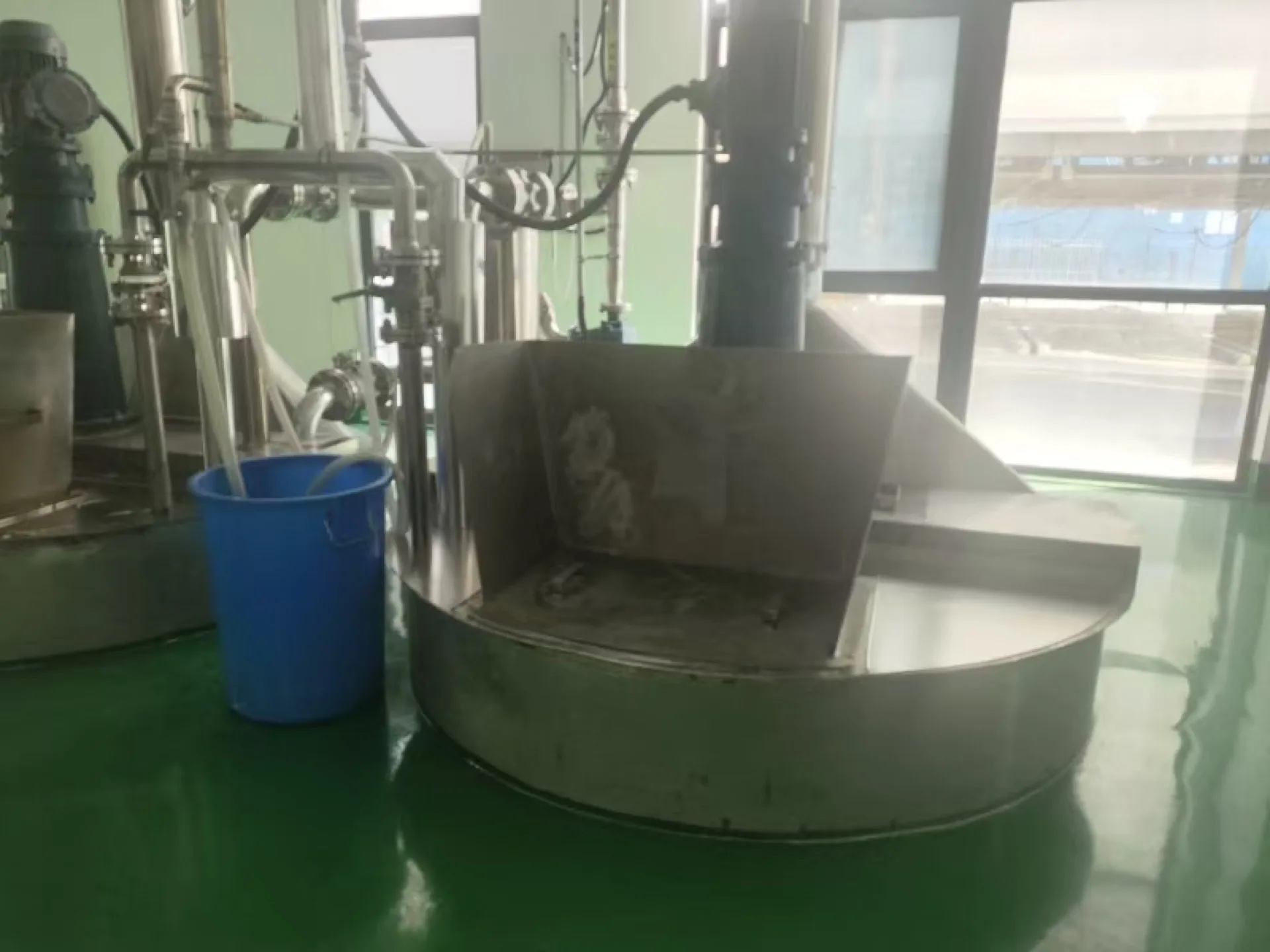
A pass requires all of the following: every critical response inside the baseline range at every checkpoint; no unplanned stoppage attributable to the blend; fill weight and throughput inside the normal operating range; cleaning unchanged, with clean-in-place completing the same verification and leaving no new film or burn-on; and the finished product passing existing release tests, with shelf-life samples set aside under a written schedule.
A first run is a pass or a hold, never a “pass with a note” on a critical attribute. One critical response outside range holds the batch until a cause is assigned; a single non-critical deviation means hold plus a confirmatory repeat run. If the run only works after someone changes the addition order, hold time or mixer speed mid-run, the premise has failed: record it, stop, and either change the process deliberately or keep the three ingredients.
Pass gate: release is signed against the Stage 2 specification, with the deviation log attached and rollback stock still available. Fail gate: a critical failure, or any mid-run adjustment needed to keep the sauce in specification, ends qualification here rather than at the end of the campaign.
Stage 5: How Do You Keep the Blend Qualified Batch After Batch?
The blend is now a single point of failure for three functions, so incoming control must go deeper than filing a COA. Compare each certificate against the agreed specification. Run a fast in-house confirmation on every batch that predicts the critical responses — in most sauce systems a viscosity curve under reference conditions, the same logic used to counter-match a supplier change with RVA data. Keep a retained sample of every batch with its code.
Trend the results, not just the verdict. Plot confirmation values against the band from the first run; a batch that passes while the mean drifts is a warning, and catching the drift beats catching the container that fails.
Pass gate: release when the COA is inside the agreed specification and the confirmation test is inside the band. Fail gate: quarantine when either fails, and re-qualify when a trigger fires — two consecutive out-of-band results, a critical failure in production, a change in the blend’s base starch, modification route or manufacturing site, a change to your recipe, target pH or solids, or a texture complaint traced to a batch. Re-qualification repeats the pilot bridge plus an abbreviated first run.
FAQ
Can a blend replace three ingredients at the same total use rate?
Total mass is not the test. Three additions usually bring carriers and water with them, and each ingredient acts at its own point in the sequence. Replacing the combined mass in one addition changes solids and hydration, so the specification must reconcile both and the pilot must confirm it.
Does one blend mean one line on the ingredient statement?
No. Labeling follows the components, not the number of bags. The starch is still food starch-modified under 21 CFR 172.892, and your finished product still has to declare what went into it.
What if the blend matches in the lab but not on the line?
Treat the lab as unproven and the pilot as the decision point. Viscosity development depends on heat and shear history, so a bench method that ignores them cannot predict a kettle. Fix the method, then rerun the bridge.
How large should the trial be?
Large enough to answer the questions, not to feel safe. You need material for a full path through the real equipment — dispersion, hold, heat, cooling, fill — a repeat if variability is wide, and shelf-life samples. A minimum working volume sets the floor.
Do we need to re-qualify if the supplier changes the starch base?
Yes. A different base starch, modification route or plant can move the viscosity curve without changing a figure on the specification sheet, so treat it as a pilot-stage trigger.
Send GFMStech your process window and the three ingredients you want to collapse into one addition, and we will build the custom blend and the counter-match data around your line rather than a generic specification.