A frozen dough line has no cook step. The mixer never gets hot enough to gelatinize raw starch, yet the dough still has to hold water through months of freeze-thaw cycles. A pregelatinized starch solves that problem before the mixer is even switched on, because it ships already gelatinized and dried.
We are a modified starch manufacturer running four production lines and 25,000 t/y of capacity at a single Suzhou base. The pregelatinized grades run on dedicated physical-modification lines inside that system. This guide explains what the powder is, how drum drying and extrusion differ, and how to spec and qualify a grade before your first order.
How pregelatinized starch makes a cold process work, how the five base materials differ, and how to spec, sample and qualify a grade for your line.
What Pregelatinized Starch Actually Is
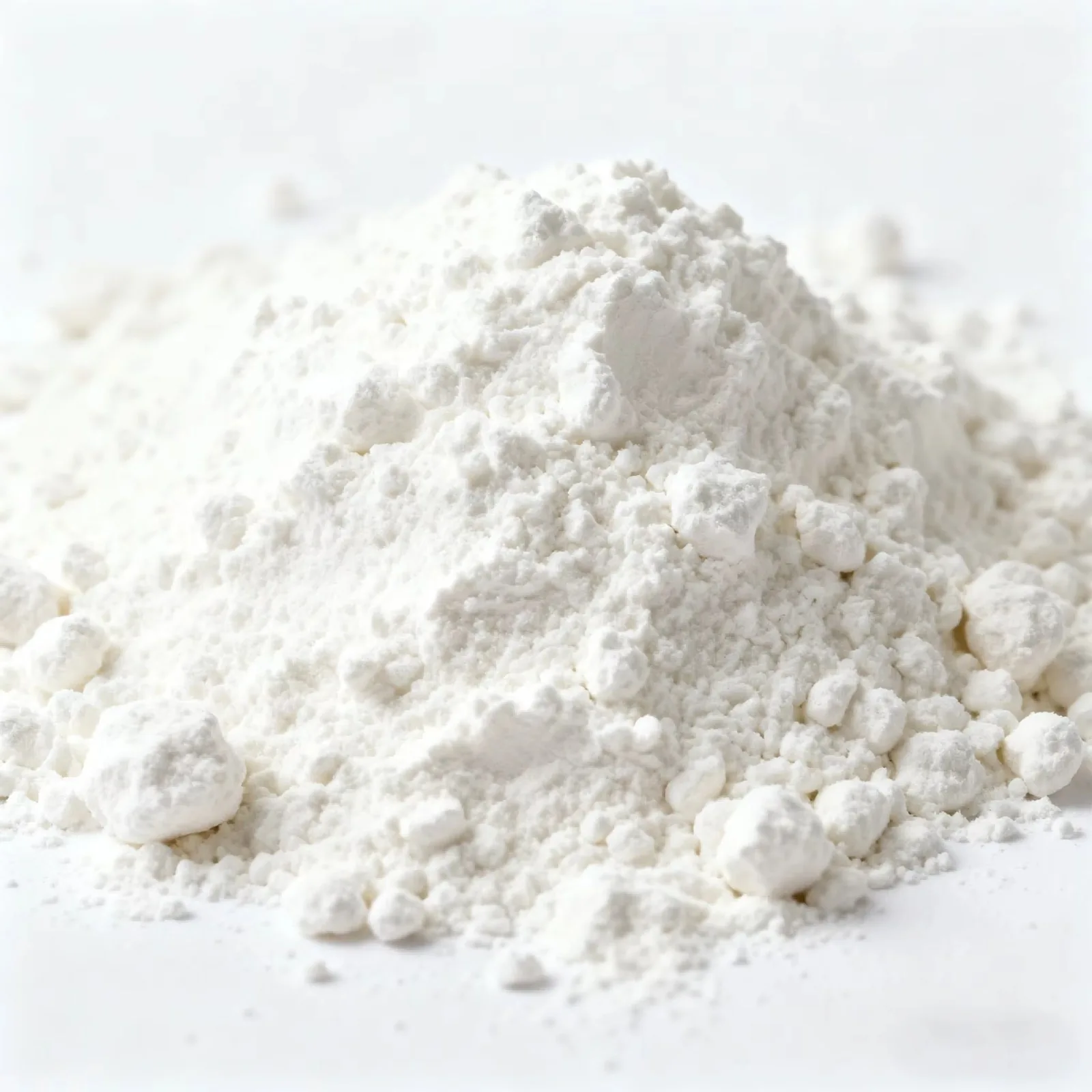
Gelatinization is what happens when starch meets water and heat. The granule swells, its crystalline structure melts, and the amylose and amylopectin chains open up. A pregelatinized starch takes that process one step further: the granule is fully gelatinized and then dried under controlled conditions, which locks the open structure in place. Add the powder to cold water and it hydrates and swells with no heat at all, forming a paste directly in your mixer or blender.
The name reads as its own spec sheet: pre means the gelatinization happens ahead of your process, at the factory rather than in your kettle. The same ingredient travels under several catalog names: cold water soluble starch, cold water swelling starch, pregelatinized corn starch, pregelatinized tapioca starch. One ingredient, several names.
Physical Modification vs Chemical Modification
Pregelatinization is a physical treatment. Heat, water and drying change the starch’s structure, and no new chemical groups attach to the molecule. That split matters at the border between ingredients and additives. In the EU, twelve modified starches hold additive approval as E-numbers, and all twelve are chemically modified. A purely physically modified grade keeps a plain starch declaration, which is one reason clean-label projects reach for it first.
What Changes Inside the Granule
Native starch needs heat to build viscosity because its granules resist cold water. The gelatinization-and-drying sequence breaks that resistance on purpose. The dried granule keeps a porous, open structure and rehydrates quickly, so viscosity develops in minutes at ambient temperature. Nothing about the molecule changes; only its physical state does.
How Pregelatinized Starch Is Made
Two industrial routes dominate, and both follow the same logic. Cook the starch fully, then remove the water fast enough that the granules keep their opened structure instead of collapsing back into a dense, cold-water-resistant form.

Drum Drying on Heated Rolls
Drum drying runs the process in two stages: gelatinization and drying. A starch slurry is spread onto heated rotating drums, where the starch cooks on contact and dries into a thin film. Blades scrape the film off, and the flakes are milled to the target mesh size. Published research on drum-dried starch shows the granules come through with relatively low fragmentation and keep a high ability to absorb water and swell at room temperature. That retained swelling power is exactly what a cold-process line buys.
Extrusion Cooking in One Pass
Extrusion runs the whole sequence inside one barrel. A preconditioned powder is conveyed through a screw, heated and sheared by the barrel walls, and pushed through a die, so cooking and forming happen in a single pass. The two routes deliver different particle shapes and hydration speeds, so the choice follows your mixer. Buying the gelatinization in powder form also carries the batch consistency the factory controls, so viscosity holds steady from one lot to the next. Drum-dried and extruded grades need separate equipment, so we run both routes under one roof at the Suzhou factory.
Why Cold Water Solubility Matters on Your Line
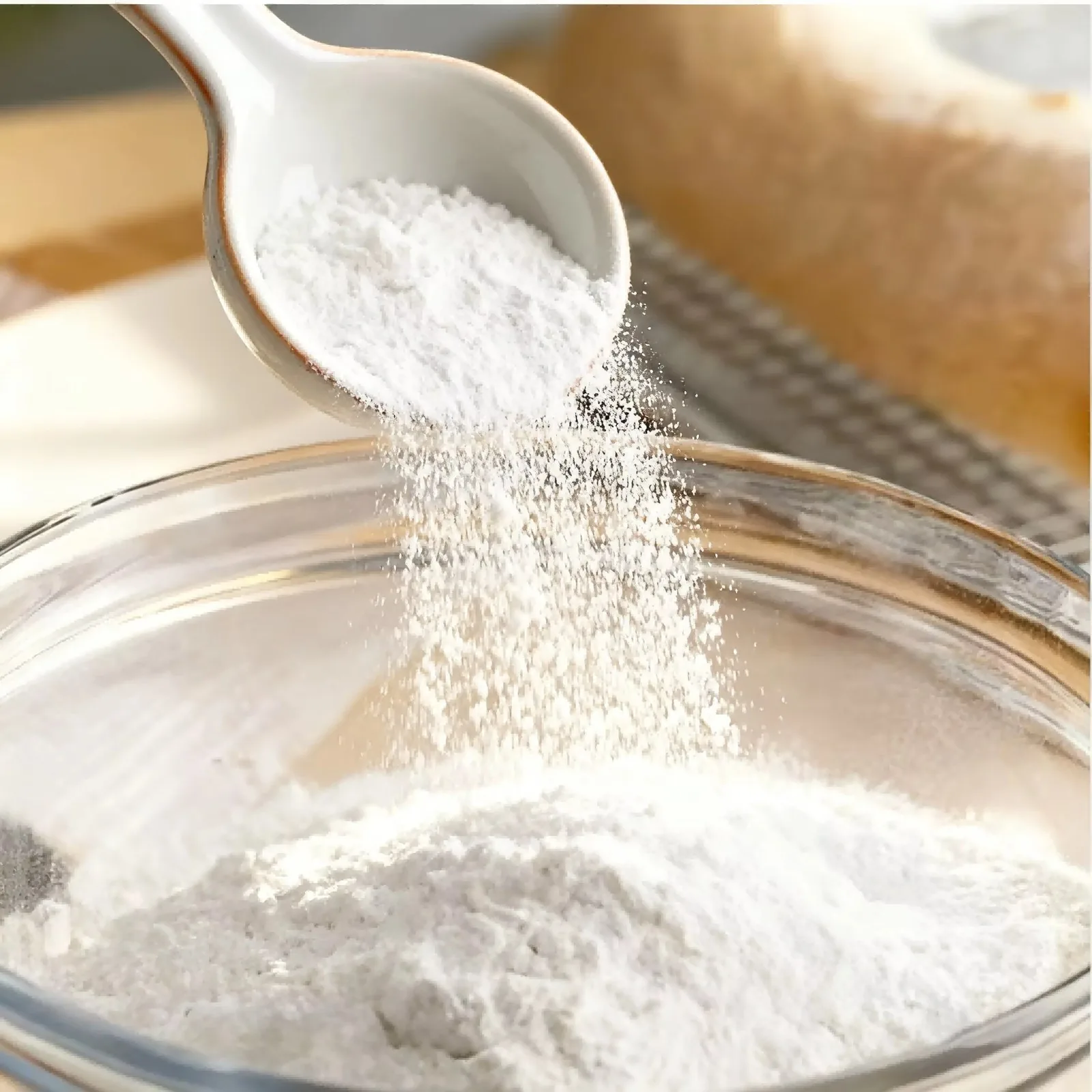
Cold water solubility removes work from a process. A line that used to cook a starch slurry in a jacketed kettle can hydrate the powder directly in the mixer instead. That drops a whole step from the schedule, along with the water you would have heated for it.
The gains show up differently depending on the product. On a cold sauce line, starch hydrates as the batch mixes. In a dry soup base, it dissolves when the end customer adds liquid, which native starches cannot do. In frozen dough, it holds water through the cold chain without any pre-cook stage. Keeping that dough from cracking and weeping in the freezer is the job the cold water soluble starch for frozen dough guide works through. The pattern repeats across all three: texture arrives without a heating step.
Dispersion is the step that catches people out. Fine starch powder tends to clump the moment it meets cold water. The outer layer hydrates first and seals the dry core inside, and a fast-swelling grade gets there in seconds. The standard fixes work at two levels: particle size enlargement, so water reaches the core gradually, or dry-blending the powder with your other dry ingredients before liquid dosing starts. Both belong in the process brief, because how the powder enters the mixer decides how smooth the batch turns out.
There is a second-order benefit that procurement teams notice first. Lines built around a cooking stage carry its costs everywhere: the vessel itself, the cleaning time between batches, the operator attention during heat-up. Removing the stage simplifies the recipe and the schedule at the same time.
Five Base Materials Behind the Range
Base material decides taste, clarity, viscosity level and cost, often before the grade number even enters the conversation. Our pregelatinized range runs five bases, from a premium waxy corn down to the commodity corn base.
| Base | Grade | What It Brings | Typical Fit |
|---|---|---|---|
| Waxy corn | P-01 | High amylopectin, low retrogradation, clear stable paste | Frozen dough, instant drinks |
| Corn | P-02 | Cost-optimized commodity base | Bulk gel and confectionery systems |
| Tapioca | P-03 | Neutral taste, clear paste, widest coverage | Frozen dough, instant soup, snacks |
| Wheat | P-04 | Available in the pregelatinized line | Frozen dough and instant mixes |
| Potato | P-05 | High viscosity | Noodle and meat products |
Start with tapioca when the application is broad and taste and clarity matter; it carries the widest coverage of the five and the most neutral profile. Move to waxy corn when freeze-thaw behaviour and paste clarity sit at the top of the list. It is also the base behind our E1442, E1422 and E1450 grades. Pick potato when you need the highest viscosity, a common choice in noodle and meat products. Corn is the bulk answer when cost drives the formula.

Base choice and grade number travel together through the whole modified starch series, so fix the base first and let the grade follow from it. On the tapioca base, the modified tapioca starch guide works through that pairing grade by grade.
Allergen declarations follow the base, not the grade. Corn, tapioca and potato bases carry no gluten concern, while the wheat base is a deliberate trade-off rather than a default.
Five Applications Driving Real Demand
Five application families carry most of the volume, and each one leans on a different property of the same powder.
Frozen dough leans on water retention and freeze-thaw stability. The starch holds moisture through repeated freeze-thaw cycles and helps slow retrogradation and hardening during storage, so thawed dough resists water separation in the cold chain. A piece that keeps its shape after thawing, without shrinking or cracking, is the result a shopper actually sees.
Instant soup mixes need thickening the moment liquid is added, cold or hot. The powder dissolves and swells directly in the liquid without a cooking step, so an instant soup thickens in the bowl. The same property builds body in ready-to-prepare meals and dry sauce bases.

Extruded snacks and puffed foods use cold-water solubility with thickening and water retention built into the formulation. The starch supports the structure through the extrusion and drying stages, then contributes texture in the finished piece.
Solid beverage systems rely on instant dispersion. The starch dissolves and swells in cold water without heating, and it can carry flavor compounds in encapsulation systems. The pattern fits instant drink mixes, flavored powders and similar dry blends.
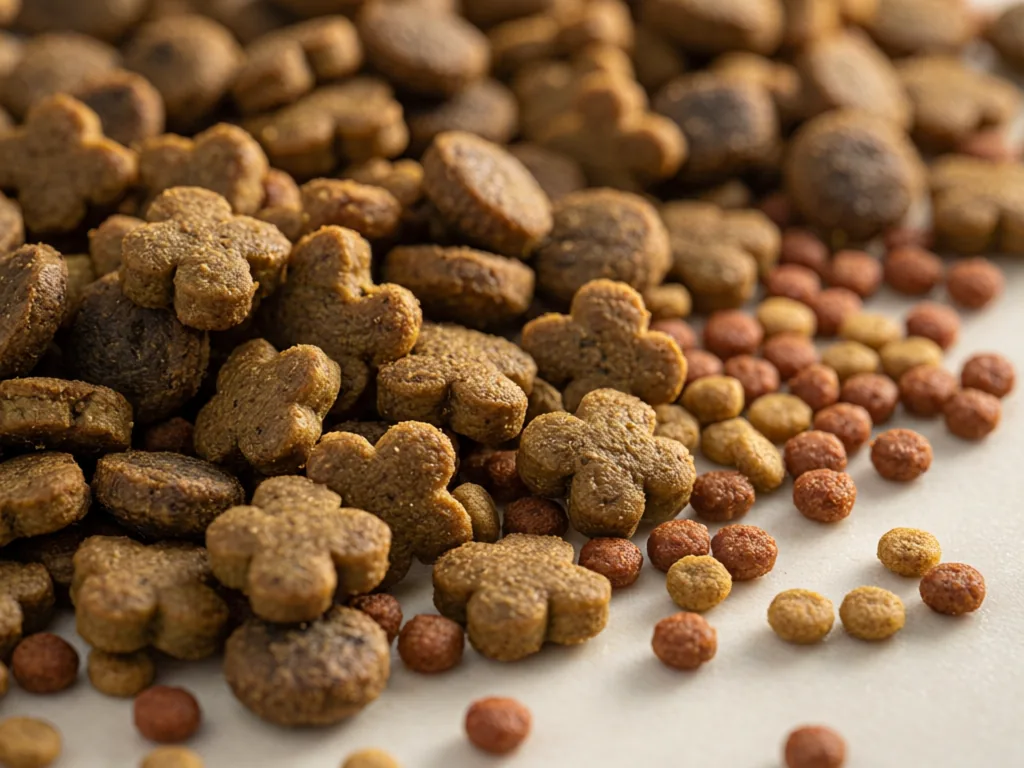
Pet food and aquafeed use the same cold binding behaviour at industrial scale. The starch holds water and binds the mix before the pellet press forms it, and batch-to-batch viscosity consistency keeps a large line steady from one shift to the next.
Read the five cases together and a pattern shows up. Frozen dough and feed rely on the powder as a water binder. Soup and sauce systems use it as an instant thickener. Beverage and snack lines lean on it to disperse flavors and build texture. Name the dominant job on your line, and the spec conversation gets shorter. Our solutions pages group the same territory by industry: meat and aquatic processing, sauces and condiments, bakery and confectionery, beverages and dairy.
How It Compares With E-Codes
Four options come up in almost every reformulation meeting: native starch, a pregelatinized grade, E1442 and E1422. The right answer follows your process conditions, not the price per kilo.
| Property | Native Starch | Pregelatinized | E1442 | E1422 |
|---|---|---|---|---|
| Cold water swelling | No | Yes, instant | No, needs heat | No, needs heat |
| Cooking step on line | Required | Not required | Required | Required |
| Heat and shear resistance | Low | Limited | High | Very high |
| EU label | Starch | Starch | E1442 | E1422 |
| Best fit | Kitchen-scale needs | Cold process and dry mixes | Frozen and acid systems | Retort and UHT lines |
The reversal matters as much as the recommendation. A pregelatinized grade loses to a cross-linked grade in a 121°C retort, in UHT processing, and under high-shear homogenization. Those conditions need chemical cross-linking, which is why retort sauces run E1422 and frozen systems often run E1442. The full comparison of the two routes, from granule structure to line fit, is in pregelatinized vs chemically modified starch. What modified corn starch actually is covers the chemistry side of that split, and E1442 and E1422 compared walks through which of the two cross-linked grades fits which line.
One misconception is worth clearing. Cold swelling removes the starch hydration step, not every heat treatment in the recipe. Pasteurization or sterilization still runs where the product needs it. The starch just stops being the reason to heat.
A second assumption deserves a check: that bases swap freely under the same grade number. They do not. Move from waxy corn to potato and viscosity, clarity and taste all shift, so write the base into the spec next to the grade.

Specs and Checks Before You Order
Two lists decide whether a first order goes well: the specs you write, and the checks you run on the supplier.
Cold viscosity and mesh size are the two variables that most often make or break a switch, and both are customizable per order. Write viscosity behaviour as a target curve rather than a single number wherever your application allows. Dry-basis moisture sits between 3 and 5 percent in our standard COA, alongside peak viscosity, heavy metals and microbiology sampled in a sterile room.
When a COA arrives, three fields carry the most weight. Check dry-basis moisture against the 3–5 percent band, peak viscosity against the agreed curve, and the microbiology panel against your market’s limits.
A reverse check beats a spec sheet on its own. Send your current viscosity curve, and the laboratory benchmarks a candidate grade against global brand curves on an RVA (Rapid Visco Analyzer) within 3 working days. The comparison then happens on your numbers instead of a catalog claim. Attach the curve to the purchase order. With a curve in the spec, an incoming batch can be checked against it before it reaches the mixer. Drift then shows up in the receiving bay, not in the finished product.
Send us your process temperature, equipment shear, oil and moisture ratio, and target shelf life. Our application lab runs the formulation and manufacturing feasibility analysis (DFM) and benchmarks your curve on an RVA. A free 500 g sample ships within 48 hours, so the first trial starts from a shortlist instead of a guess.
No MOQ makes this stage easier to run. A first order can start as a 25 kg trial batch and scale to a full container once the grade proves out. Four documents carry the proof. Every batch ships with a COA and an RVA reverse curve. Retention samples stay archived for 12 months, and the certificate set covers ISO 9001:2015, ISO 22000, ISO 14001, HALAL and KOSHER. Lead times run 10–15 working days for a first order including export inspection, and 7–10 working days on repeats. The mechanics of small first orders, from sample to container, are covered in how starch MOQ works. Where a market also requires HALAL or KOSHER certification, how to verify a HALAL starch certificate covers the four import frameworks and six fields to check.


Before the purchase order goes out, check the grade sheet once more. It should name the base, the mesh and a viscosity target, and the sample you approved should match it on every field.
Pregelatinized Starch Questions Buyers Ask

Is pregelatinized starch gluten free?
Corn, tapioca and potato based grades are naturally gluten free. A wheat-based grade can carry trace gluten, so confirm the base material before a gluten-free claim goes on the pack. FDA labeling rules require such products to test below 20 ppm gluten.
Is pregelatinized starch suitable for vegan products?
Yes. The bases are all plant materials: corn, waxy corn, tapioca, potato and wheat. The physical modification behind our grades uses heat, water and drying rather than animal-derived processing inputs, and the finished powder carries no animal content. No animal-derived processing aids enter the line at any stage.
What is pregelatinized starch used for?
Common uses include frozen dough, instant soup and sauce mixes, extruded snacks, solid beverage systems, and pet food or aquafeed binding. In each case the starch delivers thickening, water retention or binding in a process with no cooking step. The five application families above run on this same property.
Does pregelatinized starch need cooking?
No. The starch is fully gelatinized during production, so it hydrates and thickens in cold water on its own. A hot process can still run around it where your recipe calls for one, or where pasteurization and sterilization demand it. The cook step you remove is the one that existed to gelatinize the starch.
Is pregelatinized starch halal and kosher?
Our grades carry HALAL and KOSHER certification alongside ISO 9001:2015, ISO 22000 and ISO 14001 management systems. Certificates ship with the documents package, and production runs on dedicated physical-modification lines inside a single quality system. Ask for the current certificate set with your sample, so your compliance team can review it before the first order.
How does food grade differ from pharma grade?
Food grades are built for texture, cold swelling and process stability under food regulations. The same physical modification also produces pharmaceutical excipient grades, where binding and disintegration targets and pharmacopoeia testing take over. Food buyers should spec against food-grade COA parameters.
Four steps close the loop. Confirm your process is genuinely cold. Pick the base material against your application rather than the price list. Lock cold viscosity and mesh size into the spec with an RVA attachment. Then qualify the grade on your own line before the bulk order goes out.