Picture a consignee’s dock on receiving day. An inspector cuts the stretch film off a pallet of 25 kg starch bags, opens the top bag and reaches in. If the powder runs through her fingers, the pallet passes. If it has knitted into lumps, the whole pallet moves to a claim file. Nothing dramatic happened at the port; the outcome was decided weeks earlier, by the starch moisture-proof packaging the shipment travelled in.
This guide works backward from that moment. Starch packaging for sea freight is not one product but a stack of decisions. Moisture-proof packaging for starch spans bag construction, the inner liner, palletizing and stretch film, desiccant sizing, and the storage rules at the far end. Each layer closes off one route that water uses to reach the powder, so get the stack right and the bag opened at that dock pours. If you are preparing a first order, you can plan the packaging for your first order at the quotation stage.
Which packaging keeps starch powder dry at sea? A working starch moisture-proof packaging stack has four layers. A multi-layer composite kraft paper valve bag, or a jumbo bag, carries a built-in high-barrier inner liner. Bags are palletized and wrapped in moisture-proof stretch film. Every pallet carries a traceable batch number and international shipping marks. Desiccants are then sized to the container and the route. Source control comes first, because no desiccant can dry out powder that was loaded wet.
Why Starch Powder Absorbs Trouble
Starch is hygroscopic. The powder exchanges moisture with the air around it until the two sides reach equilibrium. An unprotected bag keeps adjusting its water content through every climate zone the container crosses. A dry winter warehouse in Europe and a humid monsoon berth in Southeast Asia pull the same bag in different directions, and the powder inside follows the trend.
The damage shows up first at the filling line. Moisture makes starch particles stick at their contact points, and once those bridges form, the powder stops flowing at the rate the line expects. Dosing screws deliver uneven weights, mixers meet lumps that never wet out, and a shift that planned for smooth output starts sieving instead.
Quality control works this problem from the other end. Every batch that leaves our lines ships with a COA that reports dry-basis moisture of 3-5 percent, alongside peak viscosity, heavy metals and microbiology. That narrow band is the working margin. The powder is packed dry, and the job of starch powder packaging is to hold it there through the voyage.
Raise the packaging question early. Bag format, liner class and desiccant sizing are cheaper to discuss before the bags are filled than after a claim notice arrives. Our export team reads packaging questions every day and answers them against the destination port and the season.
Where Moisture Gets Into a Shipment
Water reaches bagged powder in three ways, and each needs a different response. The first is container rain, the condensation cycle of a steel box crossing climate zones. The second is water loaded with the cargo: a container stuffed in the rain, damp pallets, or a wet floor plate. The third is shared exposure, where a consolidated container carries other shippers’ freight into the same humid air your bags breathe.
How Container Rain Forms on a Voyage
During the day, solar radiation heats a container’s steel walls and ceiling to 60 to 70 degrees Celsius. At night, or when the vessel enters a cooler zone, the steel drops quickly, often below zero. Air cannot hold the same amount of water at the lower temperature, so condensation forms on the ceiling and drips onto the cargo below. That is the mechanism behind cargo damage from moisture in sealed containers.
The scale is easy to underestimate. Containers routinely see daily swings of 20 to 25 degrees. One documented Indian Ocean case ran from 35-degree days to 15-degree nights, a gap wide enough to drive heavy condensation. The same industry research estimates that moisture damage touches up to 10 percent of all containerized cargo. Prevention, primarily through desiccants, costs about 0.1 to 0.3 percent of cargo value.
Container rain is a diffusion problem, but a wet loading day is a bucket problem. A box stuffed during a rain shower, or pallets built on a damp yard, introduce liquid water far beyond what any desiccant can absorb. Source control comes first: dry cargo, dry pallets and a dry container floor before the first bag goes in.
Shared containers add the third variable. In an LCL shipment, moisture from a co-shipped wet cargo or a leaky lot joins the same air your bags sit in. How LCL consolidation changes the moisture exposure is covered in our comparison of LCL and FCL for starch powder. It is one reason a sealed, single-consignee container keeps a cleaner atmosphere.
The Packaging Stack Layer by Layer
At the bag level, moisture-proof packaging for starch starts with the barrier. Our starch shipments use multi-layer composite kraft paper valve bags built for filling-line speed and clean emptying. A high-barrier inner liner sits inside the paper plies as an integral layer rather than a loose insert. That construction removes the film-and-bag step operators often get wrong under time pressure.
For bulk buyers, the same logic scales up to container jumbo bags. Each FIBC carries its own built-in high-barrier liner, so a single unit moves a tonne-class lot without an inner bag to fit or repair on site. The liner matters more than the outer fabric. The barrier layer is what stands between the powder and the moisture in the container’s air. It is the heart of any moisture barrier starch bag.
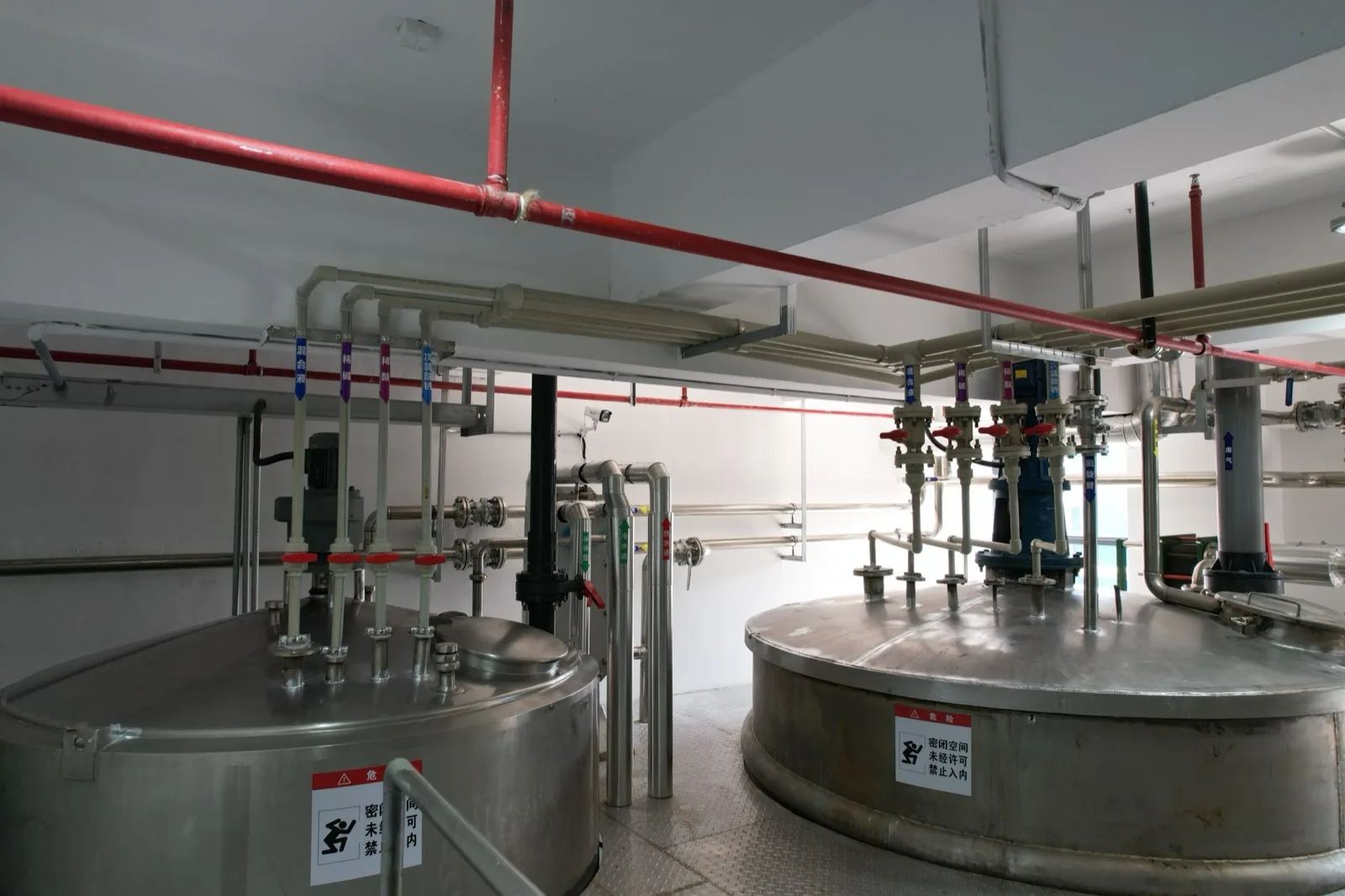
From the bag, the stack continues on the pallet. Bags are neatly palletized and wrapped with moisture-proof stretch film. The wrap does two jobs: it holds the pallet pattern through every handling step, and it shields the bag surface from drips and splash during transit and unloading.
Finally, every pallet carries a traceable batch number and international shipping marks. If a receiving inspection finds an issue, the batch number is the thread that pulls the COA, the retention sample and the production record into one room. Without that thread, a claim becomes a conversation about impressions.
Kraft Valve Bags or Jumbo Bags
The choice between the two formats is usually made by the receiving end, not by us. A distributor who sells 25 kg units onward wants kraft valve bags. A processor who batches a tonne at a time wants to cut one jumbo bag instead of opening forty small ones. The handling equipment on both ends of the trip is the deciding variable.
| Aspect | Kraft valve bag | Jumbo bag |
|---|---|---|
| Unit size | 25 kg export standard | Tonne-class single units |
| Filling equipment | Valve filler, high line speed | FIBC filling station |
| Destination handling | Manual pallet handling, retail friendly | Forklift or hoist |
| Inner liner | Built-in high-barrier liner | Built-in high-barrier liner |
| Moisture surface | More seams, more outer surface | Single skin, fewer openings |
| Best fit | Distributors, smaller plants | Processors, bulk batching |
The moisture angle separates the two formats slightly. A pallet of 25 kg bags presents more seams and more outer surface to the container’s humid air than a single jumbo unit does. Both formats lean on the liner first and the desiccant second. Whichever format you choose, the barrier layer and the film wrap stay in the specification.
Worked Pallet Math for 25 kg Bags
A standard 20 ft container takes about 11 Euro pallets in a single layer, per published container capacity data. Run the volume both ways before booking. At roughly 0.63 tonnes per cubic metre, the 33.2 cubic metres of a 20 ft box fill to about 20.9 tonnes. That is roughly 836 bags of 25 kg, before the payload ceiling arrives.
The box runs out of volume before it runs out of weight, and the remaining risk is not mass but air. Every cubic metre of headspace expands, contracts and condenses with the voyage. Desiccants and the liner manage that air; paper and fabric do not. The full loading arithmetic sits in the container loading plan for 25 kg starch bags.
Reading a Packaging Spec Sheet
When buyers compare quotes for starch export packaging, the differences hide in one document: the packaging specification. A quote that names only a kraft bag and a bag weight leaves the moisture control layer unspecified, and that is where the cost differences live. The checklist below is the list we answer, and it is worth sending to any supplier you vet.
| Field | What it tells you | What to verify |
|---|---|---|
| Paper plies and gsm | Bag strength and stiffness | Matches fill weight and stacking |
| Inner liner type | Moisture barrier class | High-barrier layer present and sealed |
| Net weight tolerance | Fill accuracy commitment | Stated in grams, checked per batch |
| Pallet and ISPM 15 | Handling and customs clearance | Heat-treated or fumigated stamp |
| Marks and batch code | Traceability chain | Ties to COA and retention sample |
| COA moisture row | Dry-basis moisture result | Within the agreed specification band |
| Stitch and seam spec | Leak paths at closure | Sealed closure at the bag top |
Reading the Liner Line on a Spec Sheet
The liner line deserves its own check. A high-barrier inner liner is what lets a fixed desiccant quantity hold a container’s headspace dry. Without the barrier, moisture migrates through the paper at a rate no strip can offset. Ask what polymer the liner uses, how it is sealed to the bag, and how the closure is tested. The answers tell you whether the barrier is a layer or a slogan.
How Many Desiccants per Container
Desiccant quantities scale with container size, and a supplier recommendation is the safest anchor. The Container Dri II usage table recommends 5 to 6 strips of 750 g, or 32 to 36 bags of 125 g, for a 20 ft container. A 40 ft container takes 10 to 12 strips, or 67 to 72 bags. Across the wider industry, the common working band is 4 to 6 strips per 20 ft and 8 to 12 per 40 ft.
| Container | Supplier recommendation | Industry band | Desiccant mass |
|---|---|---|---|
| 20 ft | 5-6 strips of 750 g | 4-6 strips of 1 kg class | About 4 to 4.5 kg |
| 40 ft | 10-12 strips of 750 g | 8-12 strips of 1 kg class | About 8 to 9 kg |
Treat the numbers as a floor that follows the actual voyage. A trans-equatorial route with heavy day-to-night swings earns the top of the band; a short temperate crossing sits nearer the bottom. What never changes is the ordering: dry cargo, sealed liner, then desiccants sized to the box.
Storage Practice at the Destination
The packaging stack hands over to warehouse practice the moment the container is unstuffed. Powder stays dry only while the air around it stays dry. Three receiving-side rules protect the margin the packaging bought. A store with controlled humidity, pallets kept off the floor and away from exterior walls, and bag surfaces left uncut until the bag is actually consumed.
Rotate by batch, first in and first out. Starch is not a vintage product, and the retention sample stays useful for twelve months. Where a store has no climate control, keep the pallets dressed in the stretch film until a pallet is broken. Reseal partly used bags into dry containers rather than leaving them open to the room.
Receiving inspection is the last checkpoint before the powder reaches production. Check the wrap for condensation marks, look for liner tears at the bag top, and match the batch number against the COA before the paperwork leaves the dock. The two-minute inspection from our opening scene decides the claim file either way.
What GFMStech Packs and Ships
At GFMStech, the packaging stack is part of the product data, not an afterthought. Starch leaves our Suzhou base in multi-layer composite kraft paper valve bags or container jumbo bags, each with a built-in high-barrier inner liner. The filled bags are palletized, wrapped with moisture-proof stretch film, and marked with a traceable batch number and international shipping marks. The same operation runs under ISO 9001:2015, ISO 22000 and ISO 14001 certificates, plus HALAL and KOSHER certificates for religious compliance.
We are a modified starch manufacturer working from a single base with four production lines and 25,000 tonnes of annual capacity. The modified starch series covers pregelatinized types, ten chemically modified E-series grades, dextrin and maltodextrin, starch sugars and base ingredients, and custom blends. All are available for neutral private-label packing where your market needs it.

Commercial terms keep the logistics simple. FOB is the preferred trade term, with EXW, CIF and DDP available on discussion. Payment runs on a 40 percent T/T deposit with the balance against a copy of the B/L. Samples leave in 3 to 7 working days, first bulk orders in 10 to 15 working days including export inspection, and repeat orders in 7 to 10.
From Sample to First Container
First orders start small and travel fast. A 500 g sample confirms the grade on your bench, a 25 kg trial exercises it on your line, and the first container follows. There is no MOQ, so the packaging conversation can begin at trial scale. How sample orders scale to full containers maps that path, including how palletization follows the customer’s pallet specification.
Send your pallet specification and destination port, and we will come back with a packaging proposal: bag format, liner, pallet pattern, marks and a desiccant quantity sized to the route. Plan the packaging for your first order before the bags are filled, and the consignee’s inspection becomes a formality.
Starch Packaging Questions Buyers Ask
How Do I Prevent Starch Caking in Transit?
Prevent caking by controlling three things: load the container dry, keep the bags inside a sealed high-barrier liner, and size desiccants to the container and route. Caking starts when free moisture reaches the powder, so source control, meaning dry pallets, dry floors and dry loading days, matters even more than absorbent capacity.
What Packaging Keeps Starch Powder Dry?
A multi-layer composite kraft paper valve bag with a built-in high-barrier inner liner, or a jumbo bag with the same liner, palletized and wrapped in moisture-proof stretch film. The liner is the barrier layer; the paper and film protect the liner. Desiccants then manage the humidity that remains inside the container.
Do Starch Shipments Need Desiccants?
For most sea freight, yes. A container crossing climate zones condenses moisture even when loaded dry. Industry guidance suggests 4 to 6 desiccant strips per 20 ft container and 8 to 12 per 40 ft as a working band. A sealed liner slows migration, but the headspace still needs management across a long voyage.
How Should Starch Be Stored at the Destination?
Keep pallets off the floor and away from exterior walls, in a store with controlled humidity where possible. Rotate stock first in, first out by batch number, and leave the stretch wrap on until a pallet is broken. Reseal any opened bag into a dry container rather than leaving it open to the room.
What Is a Kraft Valve Bag?
A kraft valve bag is a paper shipping bag with a valve opening built into the top corner. A filling nozzle pushes powder through the valve, and internal pressure seals the opening when the nozzle withdraws. Export versions use multiple kraft plies for strength and an inner high-barrier liner for moisture control.