The ingredient line reads corn starch, modified on a US panel and E1422 on an EU one. Same 25 kg bag, two correct declarations, and no hint of which chemistry sits inside. Most sourcing mistakes start in that gap.
This guide explains modified corn starch from the reactor side rather than the dictionary. We are a modified starch manufacturer running four production lines and 25,000 t/y of capacity at a single Suzhou base, and we produce all ten E-codes listed below. By the end you should be able to pick a grade for your process, read the COA that ships with it, and write a clear purchase spec. The modified starch series these grades belong to covers every base we run.
How modified corn starch is made, which of the ten E-codes fits your process, and which fields belong on the purchase spec when you order it.
What Modified Corn Starch Actually Is
A starch granule is a dense package of amylose and amylopectin chains. Heat it in water and it swells, bursts and releases those chains, which is what thickens a sauce. That behaviour works well in a kitchen and poorly on a production line, because the same granule collapses at a different point in every recipe.
Modified corn starch starts as corn-based native starch and goes through a controlled treatment so the granule behaves on command. A cross-link reinforces the granule against heat and shear. A side group keeps released chains from reconnecting as the product cools, ships and sits on a shelf. Oxidation or acid treatment shortens chains on purpose to trade viscosity for solids.
Each treatment produces a different E-code, and each E-code answers a different production problem. The industry also runs the same chemistry on more than one base. Our lines handle waxy corn, corn, tapioca, potato and wheat, and the base you choose changes mouthfeel, clarity and cost before the E-code ever enters the conversation.
One naming habit causes most of the confusion on this topic. Cornstarch, corn flour and modified corn starch are three different ingredients, and buyers use the terms loosely. Cornstarch is the native starch. Corn flour is the whole ground kernel, protein and all. Modified corn starch is the native starch after treatment, and it is the only one of the three that a formulator can specify against a viscosity curve. Specifications from different markets also write the same product as modified food starch or modified maize starch, and all three names point at the ten codes below.
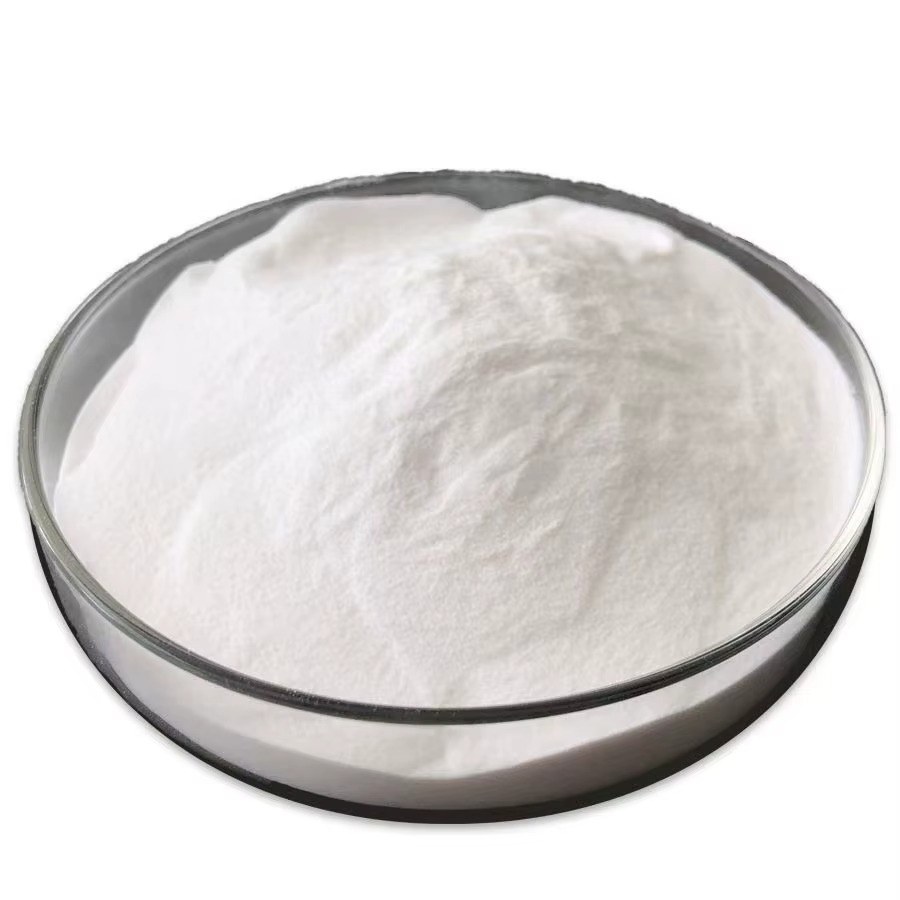
Two Routes From Native to Modified Starch
Modification splits into two families, and the split decides how the ingredient appears on a label. A physical route changes the starch without changing its chemistry, so the declaration stays a starch. A chemical route attaches new groups to the molecule, which is what produces an E-number.
Physical Modification Through Heat and Shear
Pregelatinized starch is the physical route in practice. The starch cooks and dries in a single pass, either on a drum dryer or through an extruder, so the granule arrives already opened. It dissolves and swells in cold water with no cooking step, which is why cold-process lines and dry mixes use it. The same cold-water route keeps frozen dough from cracking and weeping, as the cold water soluble starch for frozen dough guide sets out. Drum-dried and extruded grades differ in particle shape and hydration speed, so the choice follows your mixer.

Chemical Modification Through Cross-Linking and Substitution
The chemical route does the deeper work. Cross-linking builds bridges between starch molecules and reinforces the granule, which buys resistance to high temperature, mechanical shear and low pH. Substitution hangs bulky side groups on the chain and stops molecules from reassociating, which buys freeze-thaw stability, paste clarity and longer shelf life. Oxidation and acid-thinning move the other way and cut viscosity so a formulator can load more solids.
Reagents decide the family. Cross-linking uses agents such as sodium trimetaphosphate (STMP) or phosphorus oxychloride (POCl3). Substitution uses reagents such as acetic anhydride or propylene oxide. A grade carrying both a cross-link and a side group is called dual-modified. Most E-number starches in food are dual-modified, because real processes demand heat resistance and storage stability together. The full comparison of physical and chemical modification, from granule structure to line fit, is in pregelatinized vs chemically modified starch.
Inside the plant the two routes look nothing alike. A physical pass is a drying line with a drum or a barrel temperature profile and a milling step behind it. A chemical pass is a reactor with reagent dosing, a controlled hold, a neutralisation and a wash before the same drying line picks the product up. That extra stage is why chemical grades carry tighter process controls, and it is the stage worth auditing when a supplier’s COA drifts.
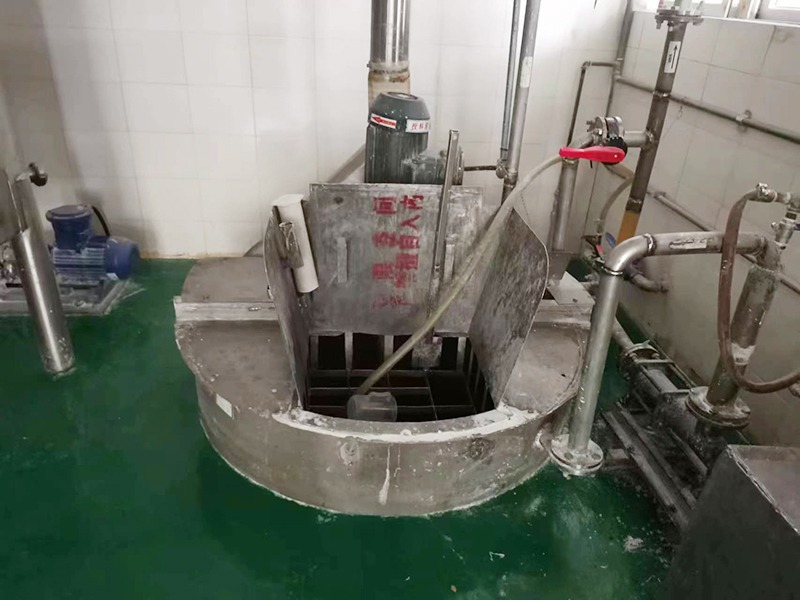
The Ten E-Codes on Our Bag Labels
Every code in this table is one we produce and ship, which keeps the list short. Ten rows, ten different answers to ten different process conditions.
| E-code | Chemical name | Chemistry | Where it wins |
|---|---|---|---|
| E1401 | Acid modified starch | Acid-thinned | Gummies, jellies, fruit prep |
| E1404 | Oxidized starch | Sodium hypochlorite oxidation | Paper sizing, textile finishing |
| E1412 | Distarch phosphate | Phosphate cross-linking | Canned foods, retort processing |
| E1413 | Phosphated distarch phosphate | Cross-linked and esterified | Frozen meals, ready meals |
| E1414 | Acetylated distarch phosphate | Cross-linked and acetylated | Sauces, frozen desserts |
| E1420 | Acetylated starch | Acetylation | Coatings and fillings |
| E1422 | Acetylated distarch adipate | Cross-linked and acetylated | UHT sauces, hot-fill ketchup |
| E1440 | Hydroxypropyl starch | Hydroxypropylation | Thickening without a cross-link |
| E1442 | Hydroxypropyl distarch phosphate | Cross-linked and hydroxypropylated | Frozen sauces, dairy, UHT |
| E1450 | Starch sodium octenyl succinate | OSA substitution | Beverage emulsions, dressings |
Read the table by column rather than by row. The chemistry column tells you which stress the grade absorbs, and the last column tells you where that stress shows up in a real product. A buyer who matches those two columns to the process conditions stops overspecifying, and overspecifying is expensive because a dual-modified grade costs more to make than a mono-substituted one.
Cross-Linked, Substituted and Dual-Modified Grades
Five of the ten grades carry a cross-link, and four of those five are dual-modified: E1442, E1422, E1414 and E1413. Cross-linking is the mechanism behind heat and shear tolerance, so those four are the candidates whenever a product passes through retort, UHT or high-shear pumping. The remaining five grades lean on substitution, oxidation or acid-thinning, and they serve work where viscosity level, paste clarity or film-forming matters more than heat survival.
The five remaining grades carry their own detail. E1420 acetylated starch gelatinises at a lower temperature than the base and brings paste clarity to coatings and fillings. E1440 hydroxypropyl starch adds film-forming and freeze-thaw stability on a clean paste, without any cross-link. E1404 oxidised starch builds carboxyl and carbonyl groups, which give it emulsification and film-forming for paper and textile work.
Inside the dual-modified four, the trade-offs pull in opposite directions. E1413 pairs high paste clarity with strong freeze-thaw stability for frozen and ready meals, while E1414 trades some freeze-thaw headroom for a smoother texture in sauces and frozen desserts.
A common mistake is treating the E-code as a quality ranking. It is not. E1401 acid modified starch is not a weaker grade than E1442. It is a different tool, and a gummy manufacturer who switches to a cross-linked grade usually fights a texture that sets too firm.
Five Base Materials Behind One E-Code
The same E-code can start from five different bases, and the base changes the outcome more than most buyers expect. It also changes the declaration your customer files, because a wheat base carries a different allergen story from a corn base. Ask for the base in writing on every order.
Our chemically modified starch grades run across all five. Waxy corn is high in amylopectin, which holds retrogradation low and the paste clear and stable, and it carries the core of the E1442, E1422 and E1450 volume. Tapioca brings a neutral taste and a transparent paste across the widest range of applications, catalogued grade by grade in the modified tapioca starch guide. Potato delivers high viscosity and appears most in noodle and meat products. Regular corn is the cost-optimised bulk base for high-volume neutral systems, and wheat runs through the pregelatinized line for cold-process work.
Native Corn Starch Against Modified Corn Starch
The difference between the two shows up fastest when a process goes wrong. Native corn starch thickens a sauce on a stove and then thins it in a retort, because heat and shear keep opening granules that were already fragile. A modified grade holds the viscosity the formulator set.
| Property | Native corn starch | Modified corn starch |
|---|---|---|
| Heat tolerance | Thins through retort or UHT | Holds through 121 C retort and UHT |
| Shear | Breaks under high-shear pumping | Maintains viscosity through the pump |
| Acid | Thins in acidic systems | E1422 holds pH 3.0 to 4.5 |
| Freeze-thaw | Water separates after a few cycles | E1442 holds through 5 or more freeze-thaw cycles |
| Cold water | Needs cooking to swell | Pregelatinized grades dissolve cold |
| Paste clarity | Opaque, sets firm | Controlled by the chemistry you pick |
| Retrogradation | Chains reassociate and the gel weeps | Substitution blocks reassociation |
Two rules save most reformulation work. Match the grade to the harshest condition the product meets rather than the average one. A sauce that ships at pH 3.8 still fails if the cook step touches pH 3.2. Treat a swap between two E-codes as a validation project, not a substitution. Hot-fill sits between 85 and 95 C, and that band alone eliminates under-cross-linked grades.
E1442 against E1422 is the clearest example. Both grades are cross-linked, both survive industrial heat, and they still split on acid resistance versus freeze-thaw headroom. Picking between them by backbone chemistry alone gets you the wrong bag a good share of the time.
Retrogradation deserves its own line because it is the failure buyers notice last. Native starch chains reassociate as a product cools and ages, which firms the texture, clouds the paste and squeezes water out of the gel. In a chilled ready meal that reads as a watery tray. Substitution slows the reassociation, which is why a substituted grade buys shelf life that a cross-link alone cannot.
If your line is mid-reformulation, send the process conditions you are designing against. We bench a candidate grade against your incumbent starch and report back before you commit to a container.
Reformulating and short on time?
Send your pH, retort temperature and target texture. We will match a grade from the ten above and run a reverse RVA curve against your current starch. A free 500 g lab sample ships before any order, with no MOQ.
Talk to Our Technical Team →How the US and the EU Label It
US rules live in 21 CFR 172.892. Food starch modified as the section describes may be used safely in food, and the quantity of any reagent must not exceed what the intended physical or technical effect requires. The container label must carry the name food starch-modified. Paragraph (a) covers acid modification with hydrochloric acid or sulfuric acid, or both.
The same section sets reagent ceilings that QA teams audit against. Oxidation with sodium hypochlorite may not exceed 0.055 pound of chlorine per pound of dry starch. Esterification with acetic anhydride may not leave more than 2.5 percent acetyl groups in the finished product. Both limits describe the process, not the product, which is why a supplier’s process controls matter as much as the COA in front of you.
EU rules take a different shape. Modified starches sit on the harmonised list of authorised food additives and carry E-numbers, and EFSA carries out the scientific risk assessments and re-evaluations behind that list. The grades we produce hold approvals as food additives across the EU, the US and the Codex Alimentarius system.
For a buyer the practical point is this. One powder can arrive as food starch-modified on a US ingredient statement and as E1442 on an EU one, and both declarations are correct. State the base material and the E-code together in the spec, because the declaration your customer files depends on the pair rather than on either half alone.

Markets that follow both systems create the odd case. A product sold in the US and shipped to the EU needs two ingredient statements for the same formula. The EU version is shorter, because an E-number replaces the descriptive name. Build the label review into the first order, not the third, and the paperwork stops being a shipping delay.
Reading a Modified Starch COA Line by Line
A COA is a contract written in numbers. Ours covers dry-basis moisture of 3 to 5 percent, peak viscosity, heavy metals and microbiology. The lab draws samples in a sterile room, so each result reflects the batch rather than the room it sat in.

What Each COA Parameter Tells You
Moisture on a dry basis is the fastest consistency check between batches. A drift outside the 3 to 5 percent band changes the effective starch load in your recipe. A powder carrying extra water carries less starch in the same 25 kg bag. Peak viscosity is the number behind mouthfeel, so compare it against your own process curve rather than a catalogue figure. Heavy metals and microbiology confirm the batch meets the limits your market enforces.
The same logic applies when you are vetting a modified starch supplier. A supplier who cannot show a per-batch COA carrying these parameters is a supplier whose quality system you are testing for free, one container at a time.
Proving a Replacement With an RVA Curve
The rapid viscosity analyser (RVA) is the instrument that settles grade arguments. Feed a starch slurry through a controlled heat, hold and cool cycle and the RVA plots viscosity over time. That curve is the closest bench imitation of what a retort or a UHT line does to a product. Eighty percent of our R&D team hold postgraduate degrees, and their Suzhou lab generates every curve we send out with a sample.
We run reverse rheology against the global brand curves your product was built on and return the comparison within three working days. Roquette, Ingredion, Cargill and Tate and Lyle are the usual reference houses. A candidate that tracks the incumbent curve through the heat ramp is worth a 25 kg trial. One that diverges during the hold is not, no matter what the spec sheet claims.
When a curve still leaves a question open, the formulation and manufacturing feasibility analysis (DFM) closes it. The analysis takes four inputs from you. They cover target processing temperature, the shear your equipment applies, the oil and water ratio of the formulation, and the shelf life with its storage temperature. The analysis turns those four answers into a grade recommendation and a set of process limits, so the first pilot run starts from a shortlist rather than a guess.
Modified Corn Starch Questions Buyers Ask
What is modified corn starch made from?
Corn-based modified starch starts from native corn or waxy corn starch and goes through cross-linking, esterification, etherification or oxidation. We run the same chemistry families on waxy corn, corn, tapioca, potato and wheat, so the base material is a separate choice from the E-code.
How does it differ from plain corn starch?
Cornstarch is native starch with no treatment. Modified corn starch carries a deliberate chemical or physical change that improves heat stability, shear resistance, freeze-thaw stability or emulsification. Where native cornstarch thins out or breaks down on an industrial line, the modified grade holds its viscosity and texture.
Is modified corn starch gluten free?
Most modified starches are naturally gluten-free, especially corn, tapioca and potato grades. A wheat-based modified starch may carry trace gluten. The base material on the COA is the deciding factor, so confirm it against your own allergen declaration rather than assuming from the product name.
What does it do in a food formulation?
It thickens and stabilises. A cross-linked grade keeps viscosity through heat and shear, a substituted grade blocks retrogradation and water separation, and an OSA grade emulsifies oil and water. The result is texture that survives the process your product actually runs through.
What is it called on an ingredient label?
In the US the declaration is food starch-modified under 21 CFR 172.892. In the EU the same product carries its E-number, such as E1442 or E1422. Both declarations describe one bag, so tell your customer which market the label targets before artwork is approved.
Can it replace a branded grade?
Yes, and the proof is measurable. We benchmark a replacement candidate against global brand viscosity curves on an RVA and return the reverse curve within three working days, then confirm on a 25 kg trial batch. Roquette, Ingredion, Cargill and Tate and Lyle curves are the common starting points.
What are the main E-numbers for modified starch?
The E1401 to E1452 range covers modified starches in the EU system. The grades we produce run from E1401 acid modified starch and E1404 oxidized starch through E1412, E1413, E1414, E1420, E1422, E1440, E1442 and E1450. In the US the same products are labelled food starch-modified.
Spec Sheet Fields Worth Copying
This is the section worth pasting into your own template. Eight lines cover most of what a starch order needs, and each one removes a round of email before the first container. It also keeps supplier quotes comparable, because every response answers the same eight questions.
| Field | What to write | Why it matters |
|---|---|---|
| Base material | Waxy corn, corn, tapioca, potato, wheat | Sets profile and allergen story |
| E-code and chemistry | E1442, E1422, E1414 and so on | Defines the modification route |
| Viscosity target | Peak viscosity against your process curve | The number behind mouthfeel |
| Lowest pH | Acid level during cook and storage | Narrows the grade list fast |
| Process conditions | Retort, UHT or hot-fill with temperature | Sets the cross-linking level |
| Packaging | 25 kg bags; neutral private-label option | Puts your brand on the bag |
| Certifications | ISO 9001:2015, ISO 22000, ISO 14001, HALAL, KOSHER | Matches your QA audit checklist |
| Commercial terms | FOB preferred; EXW, CIF or DDP on request | Locks the Incoterm early |
Two examples show how the sheet narrows the list. A frozen sauce that must survive repeated freeze-thaw points to E1442, because freeze-thaw stability drives the pick. A hot-fill ketchup at pH 3.8 points to E1422, because acid and fill temperature outrank the rest of the list. The choice has published backing: the ketchup benchmarks for E1422 trace the effect of dose on Bostwick flow and yield stress. The sheet does not pick the grade for you, but it removes the codes that cannot survive the brief.
Sit with these eight fields once, and the sheet does the work from then on. Every quote, reorder and second-source comparison is measured against that sheet rather than against a memory of how the powder looked. If order size is still the open question, how modified starch MOQ really works walks the path from a 500 g sample to the first container. Once that container is booked, the container loading plan for 25 kg starch bags takes over from there.

Want a grade recommendation on your process conditions?
Send your pH, process temperature and target texture. We will match a grade from the ten above and run a reverse RVA curve against your incumbent starch. A free 500 g sample ships within 3 to 7 working days.
Request a Free 500 g Sample →