Tomato ketchup is a stress test in a bottle. The pH sits between 3.5 and 4.0, the fill runs at 85 to 95°C, and the sauce then spends months on a shelf. That combination is why ketchup calls for an acid resistant starch rather than a thickener. Starch that holds well in a neutral gravy can fail all three of those tests at once. When it fails, the bottle shows it: a thin body, a watery mouthfeel, and serum that separates in the neck.
This article puts published numbers on the table. It covers why ketchup is hard on starch, what E1422 is, and what a 2025 model-ketchup study measured. The data shows how dosage changes texture, what vinegar does to the same system, and how the sister chemistry holds up over 60 days of storage. If you want the product side first, start with our starch solutions for sauces and condiments. For anyone buying a modified starch for ketchup, this article covers the data layer underneath.
What does published data show for E1422 in ketchup? At 0.5 to 1.5 percent dosage in a model ketchup system, Bostwick flow fell from 19.0 mm to 8.3 mm and yield stress rose from 64.1 Pa to 100.0 Pa. In the same system, 12 percent vinegar thinned the sauce to 37.5 mm. Acid decides, so the grade must be specified as an acid-resistant starch rather than a generic thickener.
Why Ketchup Punishes Starch Thickeners
Three forces act on the starch in a ketchup bottle, and they stack. The acid load comes first. Retail ketchup sits between pH 3.5 and 4.0, and hot sauces run below 3.5. At those pH levels, acid hydrolysis attacks standard starch thickeners and pulls viscosity down, which shows up as a thin body and a watery mouthfeel. Heat is the second force. Most hot-fill lines run between 85 and 95°C, and fill temperatures in that range degrade any starch that is under-cross-linked.
Time finishes the job. A sauce that passes the filler can still lose water over months of storage, and serum that separates in the bottle is one of the first defects a buyer rejects. That is the whole argument for choosing the thickener by chemistry rather than by price. The same chemistry-first rule decides the binder on brine lines that inject or tumble, compared in meat injection vs tumbling. The molecule has to survive acid, heat, and storage at the same time, because the three stresses do not take turns.
The pH 3.5 Sauce Viscosity Problem
At the bottom of the ketchup range, pH 3.5, the acid load is hardest on the thickener. Viscosity slips first, texture follows, and the defect often becomes visible only after the shelf test. This is why the operative word in a brief for a ketchup starch thickener is not “thickener” at all. It is “acid resistant”. A starch that is merely thick in water proves nothing about its behavior at pH 3.5 with vinegar in the recipe.
What E1422 Is and Why It Holds
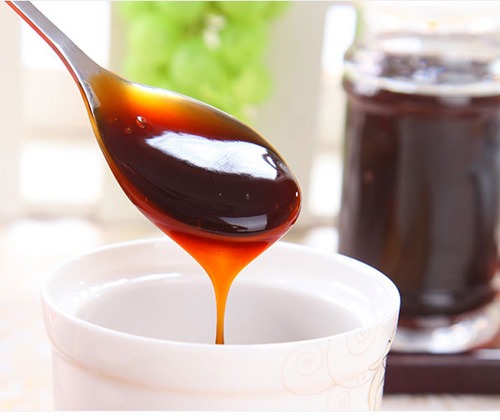
E1422 is acetylated distarch adipate. The E-number hides two modifications inside one molecule: adipate cross-links that bridge starch chains, and acetyl groups attached along those chains. The cross-links are the load-bearing part for a sauce. They hold the swollen granule together while acid and heat attack it, which is why hot-fill temperatures break down under-cross-linked starch but not a properly cross-linked grade.
The practical result is a grade engineered for pH 3.0 to 4.5 systems such as ketchup and hot sauces, and it survives hot-fill processing without viscosity loss. Native starch and lightly treated starch do not behave that way. At ketchup pH, acid hydrolyzes them, and the bottle thins long before the season ends.
Base material matters too. The E1422 benchmarked in the study below was built on waxy corn, and the corn starch base behind E1422 shapes texture and cost before the E-number does. E1422 sits inside the modified starch series we build for sauces, alongside grades for frozen and emulsified systems.

What the Published Benchmarks Show about Dosage
The clearest published benchmark for E1422 in ketchup comes from a 2025 study in Food Science and Biotechnology, run by researchers from Seoul National University and Ottogi. The team dosed E1422 into a model tomato ketchup at 0.5, 1.0, and 1.5 percent. The paper describes that range as similar to conventional ketchup production, citing work by Porretta from 1991. For anyone sourcing starch for ketchup, it is the only published dose ladder of its kind.
Two setup details matter when reading the results. The base was a 31 Brix tomato paste diluted one to one with water. The starch was pre-gelatinized in water at 80°C for 10 minutes before mixing. Each ingredient was tested against the paste control on its own, so this is a model system, not a finished ketchup recipe. Read the numbers as directional bench data, not as a formula to copy.
| System (model ketchup) | Bostwick flow (mm) | Apparent viscosity at 10 s⁻¹ (Pa·s) | Yield stress (Pa) |
|---|---|---|---|
| Tomato paste control | 19.0 | 7.96 | 64.1 |
| E1422 at 0.5% | 16.0 | 9.79 | 77.5 |
| E1422 at 1.0% | 12.5 | 11.11 | 89.3 |
| E1422 at 1.5% | 8.3 | 13.57 | 100.0 |
Read the direction first: a lower Bostwick flow means a thicker sauce. The paste control flowed 19.0 mm; at 1.5 percent E1422 the same system flowed just 8.3 mm. Apparent viscosity at 10 s⁻¹ rose from 7.96 to 13.57 Pa·s, and yield stress climbed from 64.1 to 100.0 Pa. Elasticity moved with them, with the storage modulus at 1 Hz rising from 1526.9 to 2009.0 Pa across the dosage ladder.
Reading a Bostwick Consistency Target
Bostwick flow is measured with a consistometer: the sample equilibrates at 20°C, the chamber gate opens, and the distance the sauce travels in 30 seconds is recorded in millimeters. A lower number means a thicker product. That makes a Bostwick target easy to use on a line, because you are specifying how far the sauce flows rather than how viscous it feels. At 1.5 percent dosage, the study’s E1422 system read 8.3 mm against 19.0 mm for the unmodified control.
The Acid Case in Vinegar Dosing
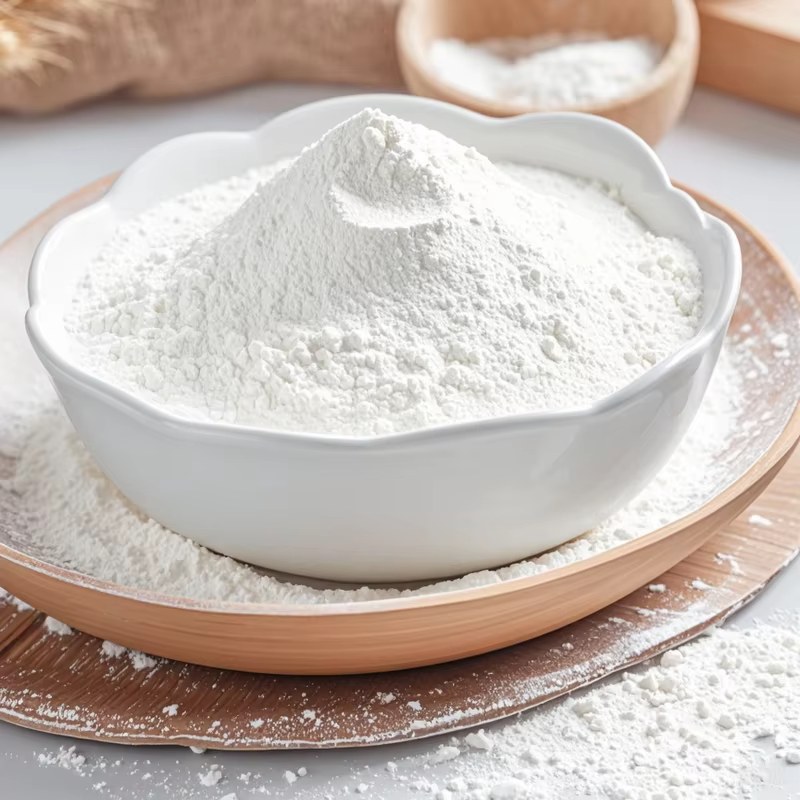
The same study tested acid head-on. Instead of a modified starch, the researchers dosed vinegar into the model system at 4, 8, and 12 percent, and the sauce thinned at every step. Bostwick flow rose from 19.0 mm at the control to 28.5, 32.8, and 37.5 mm. Apparent viscosity at 10 s⁻¹ fell from 7.96 to 5.87 Pa·s at the top dose, and yield stress dropped from 64.1 to 49.0 Pa. That curve is the acid load a ketchup starch thickener is designed to ride through.
| System (model ketchup) | Bostwick flow (mm) | Apparent viscosity at 10 s⁻¹ (Pa·s) |
|---|---|---|
| Tomato paste control | 19.0 | 7.96 |
| Vinegar at 4% | 28.5 | 7.55 |
| Vinegar at 8% | 32.8 | 6.49 |
| Vinegar at 12% | 37.5 | 5.87 |
| Sugar at 10% | 23.8 | 7.20 |
| Sugar at 20% | 29.0 | 6.40 |
| Sugar at 30% | 40.8 | 5.96 |
Sugar showed the same direction on flow. At 10, 20, and 30 percent, Bostwick flow climbed to 23.8, 29.0, and 40.8 mm, and apparent viscosity fell to 5.96 Pa·s at the top dose. In a ketchup recipe, both the acid load and the sugar load push the base system toward flow, which is why the thickener has to be chosen for the finished recipe rather than for water.
A second study, published in 2022, shows how deep into the acid zone real ketchup-style formulations sit. Across tomato-based sweet-and-sour sauces, measured pH ranged from 3.49 to 3.76. The paper notes that pH below 4.0 is generally considered the threshold for product stability, citing Rajchl and colleagues. Their formulation carried white vinegar at 30 percent of the base mass and was pasteurized at 90°C for 60 seconds before concentration to 28 Brix. Those are the kinds of conditions a ketchup starch is asked to survive.
The takeaway from both data sets: acid load is a dial, not a switch. The more vinegar a recipe carries, the harder it pushes on the thickener, and the more the grade choice and the dosage matter.

Serum Separation and What It Signals
Thinning is the fast failure. Serum separation is the slow one. When water works its way out of the sauce matrix, it pools in the neck of the bottle, and consumers read that film of liquid as spoilage long before any micro test says so. The first study tracked the effect for six weeks using a screen-tube method. A 60-mesh screen holds the sauce while free liquid drains, and the drainage is logged over time and fitted to an Avrami-style curve. The study’s own numbers live in its figures, but the method is the point. Serum separation is measurable, and it has a time axis.
The second study frames why it matters. Consistency and syneresis move in opposite directions: sauces that flow farther tend to release more liquid, and hydrocolloid additions that improve consistency show up as lower Bostwick values. In practice, a grade that builds more body also holds more of its water, and that pairing is what protects the bottle through shelf life.
Fixing the Ketchup Serum Separation Problem
Two levers keep serum in place. The first is dosage and full hydration, because an under-dosed or poorly hydrated starch builds less body and less water-holding capacity. The second is grade chemistry, and the closest 60-day sauce data we found for this family of cross-linked acetylated starches comes from the sister chemistry. A 2024 study in Frontiers in Nutrition dosed acetylated distarch phosphate, E1414, into an oyster sauce at 0 to 5 percent. Water-holding capacity, firmness, consistency, and cohesiveness all improved. Average particle size and zeta potential fell, pointing to combined electrostatic and steric stabilization. Texture held across 0, 10, 20, 30, and 60 days with no significant change in the instability index.
E1414 is not E1422. It is the phosphate-cross-linked, acetylated sibling, and the study is included here because it is the closest long-run sauce data for this chemistry family. For the storage check itself, the second study used a practical proxy: centrifugation at 2400 g for 15 minutes.

From Bench Numbers to Grade Choice
Three numbers read differently on a line. Bostwick flow describes how far the sauce travels under its own weight, the fastest check in a receiving lab. Apparent viscosity at 10 s⁻¹ describes how the sauce behaves under pumping and filling shear. Yield stress describes how much force it takes before the sauce starts to flow at all. It tracks with the look of a full bottle: a sauce near 100 Pa holds its shape, and one at 49 Pa starts to sag. The storage modulus is the elasticity reading behind all three, and it rose with dose in the study, from 1526.9 to 2009.0 Pa at 1 Hz. That is the leverage a ketchup starch thickener buys with dosage.
Two cautions before you file these numbers next to your specification. First, units. The model-ketchup study reports Bostwick flow in millimeters at 20°C over 30 seconds. The 2022 study reports the same test in centimeters per 30 seconds. Never convert one into the other or compare across them. Compare only within one method, on the same instrument and the same conditions. Second, the model system. The bench numbers come from a paste-and-water base with one ingredient varied at a time, not from a finished recipe with your solids, your sugar, and your process. Use published values as a directional target, then confirm against your own target curve.
Grade fit is the last decision. Three cross-linked grades cover most sauce work, and choosing the right acid-resistant starch for ketchup follows the dominant stress.
| Grade | Chemistry | Handles best | Sauce fit |
|---|---|---|---|
| E1422 | Cross-linked and acetylated (adipate) | Acid plus hot-fill heat | Tomato ketchup, hot sauces, condiments |
| E1442 | Cross-linked and hydroxypropylated | Freeze-thaw cycling (5 or more cycles) | Chilled and frozen sauces |
| E1450 | Octenylsuccinylated | Oil and water emulsification | Pourable dressings |
For an ambient, hot-filled ketchup, the load is acid plus heat, which is the combination E1422 is engineered for. Still weighing the two cross-linked workhorse grades? The side-by-side on how E1442 compares with E1422 in sauces walks the comparison, including the freeze-thaw case where the answer flips. Where a gum or a blend is also on the shortlist, the food thickener selection guide compares the families on heat, acid and freeze-thaw duty.
What US Rules Require of Ketchup
In the United States, ketchup is a standardized food, and the standard explains why the starch question exists at all. Under 21 CFR 155.194, catsup, ketchup, or catchup is prepared from tomato ingredients plus, in each category, vinegars, nutritive carbohydrate sweeteners, and spices or flavorings. When the product is sealed and held at ambient temperatures, the regulation requires that it be so processed by heat, before or after sealing, as to prevent spoilage. Heat processing is not a line preference in that market. It is part of what the product is.
The same standard allows organic acids on the tomato concentrate in quantities no greater than necessary to adjust the pH, which is where recipe-level acid adjustment lives in the rule. The finished pH remains your formulation decision, and it is the number any modified starch for ketchup has to be chosen against.
Heat Processing on a Hot-Fill Ketchup Line
Put the rule and the process together. The regulation requires a heat step sufficient to prevent spoilage. A hot-fill ketchup line typically runs its fill between 85 and 95°C. Fill temperatures in that range degrade any starch that is under-cross-linked. That chain is why a ketchup project should treat the starch specification as part of process validation rather than as a purchasing afterthought.
Validate Before You Commit to a Grade
The published numbers give you a direction. Your own line gives you the answer, and the validation loop is where the answer is found. We are a modified starch manufacturer with a single Suzhou base and 25,000 tonnes per year of capacity across four production lines. Our R&D team is 80 percent master’s degree or above. The quality system holds ISO 9001:2015, ISO 22000, and ISO 14001, alongside HALAL and KOSHER certification.
Every sauce grade is benchmarked in our in-house RVA laboratory against the customer’s own target viscosity curve, so the curve you validate is the curve we released against. Each shipment arrives with a per-batch COA that lists target and actual side by side; what a per-batch COA reports covers how to read it. Validation starts small: free samples ship within 48 hours, and a 25 kg trial batch carries a formulation from bench to line before anyone commits to a container. There is no MOQ.
Your Starch Dosage Validation Trial, Step by Step
Step one: write the target. Decide what your line measures, whether that is a Bostwick flow, an RVA curve, or a laboratory viscosity at a set shear rate, and fix the acceptance range before the trial starts. Step two: request the grade and its COA, and check the certificate against your target rather than against a brochure. Step three: dose inside the published window of 0.5 to 1.5 percent and bracket it, because the model-ketchup data shows real texture movement across that range.
Step four: run the trial through your own hot fill and cooling conditions, since the fill temperature is where under-cross-linked starch gives itself away. Step five: hold samples and watch for serum separation over the weeks after filling, not only on day one. That sequence turns a bench number into a released grade.

Tell us your sauce type, pH, fill temperature, and target viscosity. We will match the right E-code to the duty, benchmark it on the RVA against your target curve, and ship a free sample with its per-batch COA within 48 hours. Start with starch solutions for sauces and condiments.
What Buyers Ask about E1422 in Ketchup
What Starch Is Used in Ketchup?
Ketchup recipes lean on cross-linked modified starches that hold viscosity through acid and heat, and E1422 (acetylated distarch adipate) is a common choice for hot-fill systems between pH 3.0 and 4.5. A published model-ketchup study tested E1422 at 0.5 to 1.5 percent dosage, the range the paper describes as similar to conventional ketchup production.
Does Acid Break Down Starch in Ketchup?
Yes, and that is the core problem in ketchup. Acid hydrolysis thins standard starch thickeners, and in the model-ketchup study, vinegar doses of 4, 8, and 12 percent pushed Bostwick flow from 19.0 mm to as high as 37.5 mm. Cross-linking raises resistance, but how much margin an acid resistant starch keeps depends on the recipe’s acid load.
Is E1422 Better Than E1442 for Ketchup?
For an ambient ketchup that is hot-filled, E1422 is usually the better fit, because it is engineered for acid systems and hot-fill heat. E1442 is the freeze-thaw specialist, stable through five or more cycles, and it suits chilled or frozen sauces better. The process decides, not the product name.
How Much Starch Is Used in Ketchup?
Published work puts the conventional ketchup range at 0.5 to 1.5 percent modified starch. The model-ketchup data shows real texture movement across that window: Bostwick flow fell from 19.0 mm for the plain paste to 8.3 mm at 1.5 percent E1422. Start inside the range and tune against your own target curve.
Can I Get a Sample Before Ordering?
Yes. Free samples ship within 48 hours and arrive with a per-batch COA, and a 25 kg trial batch carries the grade through formulation validation on your line. There is no MOQ. Send the sauce type, pH, fill temperature, and target viscosity, and we will match the grade to the duty.